Company Profile


As a ceramic and carbon company, we have excellent quality control and products covering various applications such as semi-conductor,high-temperature furnaces, non-ferrous,pigment,magnetic powder, rubber,break pads and more. We have a dedicated research and development team committed to technological innovation and developing new products to meet customer demands. We have flexible production capabilities to provide customized refractory material solutions according to customer needs. With these competitive advantages, we strive to become your trusted and reliable supplier of refractory materials.


Why Choose Us

Factory

The founder,Mr Tang,open the first factory in Zibo and produce graphite molds and synthetic graphite powder. For Mr tang once worked for a state-owned graphite company, he has much experience in graphite application. Gotrays grow quickly in business.

Quality Control

Our team is experienced bringing wide knowledge to every order we received. We train our employee to ensure they posses the skills and qualifications to deliver outstanding results.


High Quality

We are committed to producing and providing high-quality product. We take advanced production techniques and strict quality control measures to ensure our products have excellent performance, stable chemical composition, and reliable service life.


Professional Team

We value environmental protection and sustainable development, focusing on developing and producing eco-friendly materials. We actively adopt energy-saving and emission-reducing production processes, promote recycling and resource utilization to minimize our impact on the environment.


First 1234567 Last

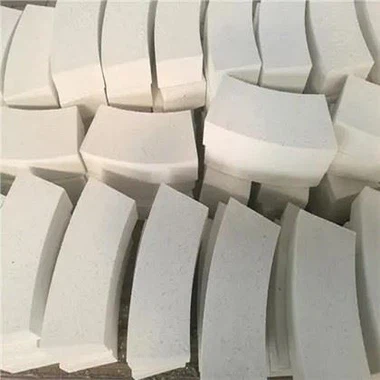
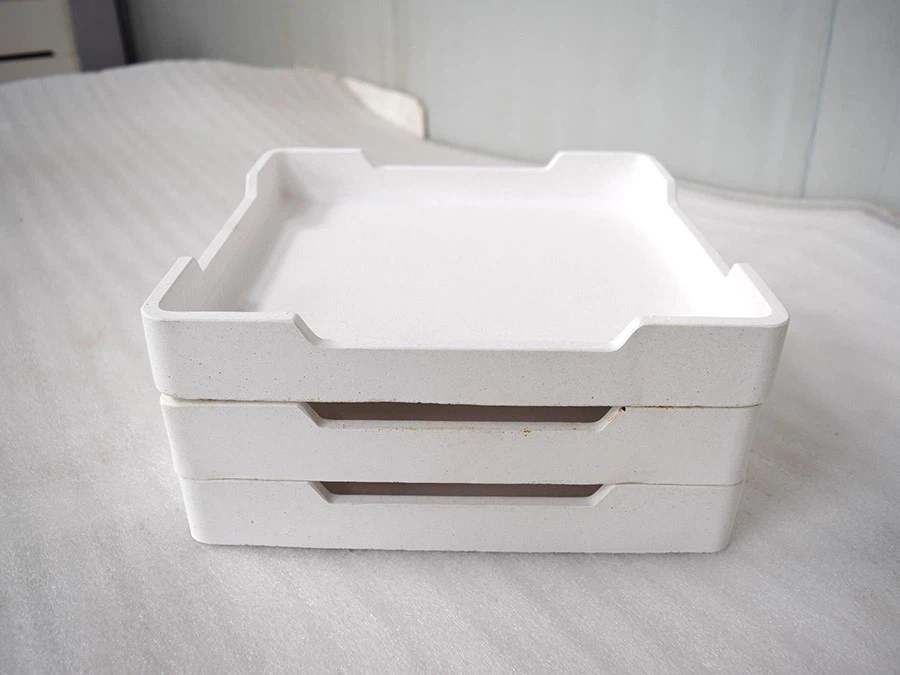
We serve kiln setter, sintered plate, sagger, crucibles and other products that can be used for roller kiln, shuttle kiln, pusher plate kiln, shaft kiln and rotary kiln, etc. Our products range from fused quartz, fused silica, cordierite-mullite, corundum-mullite, corundum, alumina, etc.,all of which can be made in various types and sizes upon customers' request.


Mullite Sagger For Lithium Manganate Sintering And


What is Kiln Furniture?

The term “kiln furniture” describes a range of products used by many industries to support items during heat treatment processes. If you have a ceramic item that needs firing in a kiln or furnace, you will probably need kiln furniture to ensure it keeps its shape, doesn’t break during firing, and don’t stick to/damage your kiln.
Let’s start with the basics, kiln furniture conveys holders and accessories where you hold or support your ceramic pieces into the kiln to be fired.
In this way, each kiln furniture device provides safety to all the pieces and allows them to have a uniform firing.


Benefits of Kiln Furniture
 
01/

Thermal Endurance: These pieces withstand extreme temperatures, often reaching over 1000°C. Their ability to endure such conditions without deteriorating ensures that ceramics are consistently supported throughout the entire firing process, which can span several hours to days.

02/

Consistent Firing: Kiln furniture is designed to facilitate even heat distribution within the kiln. This uniformity is vital for achieving consistent firing results across all ceramic pieces. Uneven heating can lead to defects like cracking or glaze imperfections, which can ruin the aesthetics and functionality of the ceramics.

03/

Maximizing Kiln Capacity: Efficient design of kiln furniture allows for the stacking of ceramics in the kiln. This space optimization is key in maximizing the number of pieces that can be fired in a single cycle, significantly increasing production efficiency and reducing energy costs.

04/

Maintaining Chemical Integrity: The materials used in kiln furniture are chemically inert, meaning they do not react with the ceramics or glazes. This inertness is essential to prevent contamination that could alter the colour, texture, or strength of the final ceramic product.

05/

Longevity: The durability of kiln furniture is a significant factor in its importance. Being able to withstand repeated firing cycles without significant wear reduces the need for frequent replacements, contributing to both cost-effectiveness and environmental sustainability in ceramic production.

06/

Resilience to Temperature Fluctuations: The firing process involves rapid heating and cooling phases. Kiln furniture’s ability to resist thermal shock (sudden temperature changes) is crucial. It ensures that the pieces do not crack or break under these conditions, maintaining their integrity and reliability throughout numerous firing cycles.


Types of Kiln Furniture


Structural kiln furniture
Structural kiln furniture is an essential component of industrial kilns. During service, it operates at high temperatures within the kiln, directly exposed to gas flames or receiving heat transfer from heating elements. It typically bears loads heavier than its weight, sometimes several times its weight, without deforming or breaking. This necessitates a certain level of high-temperature mechanical strength and excellent thermal shock stability.


Sintering Vessels
These are specialized kiln furniture used to support ceramic green bodies during firing or to hold powders (such as cathode materials, magnetic powders, and high-purity ceramic materials) for heat treatment in roller kilns, push plate kilns, and tunnel kilns.
Depending on the sintering process used by the manufacturer, these kiln furniture pieces are subjected to different heating conditions. The material of these products depends on the type of sintering body and the heat treatment process.


Special Kiln Furniture
Special kiln furniture refers to kiln accessories customized and designed for unique or specialized applications in the ceramics industry. These pieces are tailored to meet particular needs, such as supporting specific shapes, accommodating high-temperature processes, or protecting delicate ceramic ware during firing.


What Materials Are Kiln Furniture Made of?


Kiln furniture must be stable, resistant to thermal shock cracking, lightweight, and able to withstand not only extreme operating temperatures but also the stress of repeated heating and cooling.


Materials Used For Kiln Furniture
One of the most common materials that we make kiln furniture in is cordierite, though we also make it in materials such as mullite, silicon carbide and alumina (often for specialist applications).


Cordierite Kiln Furniture
Cordierite is an excellent material for kiln furniture for a number of reasons. Our cordierite kiln furniture is both porous and low density, making it extremely cost-effective for producing supports that can be used in a range of heat treatment processes.


Cordierite also has a very low creep rate, which means it deforms under stress at a much lower rate to other materials. It is also resistant to thermal shock cracking and stable at high temperatures, all of which are essential elements for cost-effective kiln furniture, especially in the manufacturing of sanitaryware and heavy clay products.


Mullite Kiln Furniture
Mullite, also known as porcelainite, is a naturally occurring constituent mineral that forms under high temperatures through the reaction of silica, alumina and magnesia. When used as a material for kiln furniture, it remains strong at high temperatures, resisting bending and breaking under the stress of the load.


Mullite is suitable for temperatures up to 1300 ºC (2372 ºF). For higher temperatures, kiln furniture made from materials such as silicon carbide or alumina may be more suitable.


Silicon Carbide Kiln Furniture
Silicon carbide is extremely resistant to thermal shock, as well as being lightweight with high mechanical strength. It is also suitable for high temperatures (from 1300-1650ºC). We manufacture and supply silicon carbide products in the form of batts and kiln shelves, beams, burner nozzles, adjustable props, tubes, rollers, saggars, setters, heating elements, and in bespoke shapes to suit the needs of your manufacturing process.


Alumina Products
Alumina is a commonly used technical ceramic due to its high mechanical strength and rigidity. We supply a range of alumina products including tiles, alumina tubes, crucibles and boats, ignition trays, stilts, pins and pips, discs and investment casting plugs.


What Industries Use Kiln Furniture?

Tableware

Tableware items such as plates and bowls have distinctive shapes which must remain consistent throughout production runs. Kiln furniture supports these products, helping them retain their shape and avoid breaking during firing.

Sanitaryware

Sanitaryware products need support for the same reasons that tableware does. The sanitaryware industry usually uses furniture such as extruded batts which are capable of holding stronger loads, allowing them to support their much bigger and heavier products.

Mullite Sagger For Lithium Manganate Sintering And

Powder Metallurgy

Kiln furniture is used as a carrier during the sintering of powder metal parts to improve the dimensional accuracy achieved.

Glass Manufacturing

Large extruded batts are used to support glass façade cladding panels during their firing processes. It is also useful for slumping, a process where glass sheets are placed over a mould and heated until they warp, falling into the mould and taking its shape. In this application, the kiln furniture would take the role of the mould.


Advancements and Innovations in Kiln Furniture Design


The realm of kiln furniture design has witnessed significant advancements and innovations, driven by the evolving needs of the ceramics industry. These developments not only enhance the performance of kiln furniture but also contribute to greater efficiency and sustainability in ceramic production.


Material Innovations:
Advanced Refractory Composites: New composite materials, combining traditional ceramics with advanced refractory metals or ceramics, have been developed. These composites offer improved heat resistance, reduced weight, and greater strength, making kiln furniture more efficient and durable.

Enhanced Thermal Conductivity Materials: Materials with improved thermal conductivity have been introduced. These materials facilitate faster and more uniform heat transfer, reducing energy consumption and improving the consistency of firing results.


Design Optimization:
Customizable Designs: With advancements in computer-aided design (CAD) and simulation software, kiln furniture can now be custom-designed for specific kiln types and firing processes. This customization ensures optimal space utilization and airflow within the kiln, leading to more efficient firing cycles.

Lightweight and Modular Designs: The shift towards lightweight and modular kiln furniture designs has made handling and storage more manageable, while also allowing for quick and easy configuration changes inside the kiln.


Environmental Sustainability:
Recyclable and Eco-Friendly Materials: There is an increasing focus on using recyclable and environmentally friendly materials in kiln furniture production. This shift not only reduces the environmental impact but also aligns with the growing demand for sustainable practices in manufacturing.

Energy-Efficient Designs: Energy efficiency is a crucial aspect of modern kiln furniture design. Innovations in material science and design are leading to the development of kiln furniture that requires less energy to achieve the desired firing temperatures, thereby reducing the overall carbon footprint of ceramic production.


Kiln furniture and kiln shelves

In order to fire efficiently and safely, you need kiln furniture and kiln shelves of the highest quality. Is happy to advise and assist you on different materials, sizes and stacking systems. We deliver all materials you may need for your process.


Kiln shelves
We have shelves in cordierite, mullite or silicon carbide quality. In various thicknesses and dimensions, depending on your application. We keep stock of cordierite shelves with standard dimensions of 600 x 700 x 20 mm and 600 x 500 x 20 mm. Besides these we also have various smaller shelves on stock. Different qualities and/or dimensions can be supplied to order.


Kiln furniture
If you want to create more layers in your kiln, you need kiln furniture. Therefore we have kiln posts in many dimensions and shapes on stock. Oval, round, square. Whatever suits your needs best.
Except kiln posts we also supply and design complete stacking systems. Like a tile rack system; consisting of posts and shelves. Please inquire about our possibilities.

Mullite Sagger For High Nickel Ternary Cathode(NCM523/NCM622/NCM811)


Four Ways to Save Weight in Kiln Furniture


As energy costs increase and production demands accelerate, kiln operators are always searching for ways to reduce the weight of kiln furniture — the structures that hold ceramic ware while it is being fired in the kiln.


Light kiln furniture translates into short firing cycles, increased fuel savings and low kiln emissions. With traditional kiln furniture, much of the energy in the firing process can go toward firing the refractories rather than the ware. The savings are particularly dramatic for the production of delicate items such as bone china, where the refractory-to-ware ratio is relatively high. However, lightweight kiln furniture also saves energy in other applications: more robust pottery, artware and dishes; whiteware and sanitaryware items such as basins, sinks and bathtubs; and even heavy industrial ceramics such as high-voltage electrical insulators.


Take Advantage of New Materials
Most manufacturers have already made the switch to silicon carbide (SiC), which offers a dramatic weight reduction compared to conventional cordierite products. Even more advanced SiC-based materials are now available, such as nitride-bonded SiC (NSiC). These advanced materials are thinner, lighter and stronger than traditional SiC; for example, an NSiC shelf can offer weight savings of 60% versus SiC. Newer materials also feature longer service life with improved oxidation resistance, thermal shock performance and creep.


Reduce Weight Further with Perforated Slabs, Batts and Setters
These can reduce the weight by more than 10% compared to non-perforated structures with the same thickness. Perforated slabs and setters also enable better airflow, resulting in faster firing cycles.


Maximize the Use of the Available Space
Manufacturers optimize kiln throughput with furniture that is custom-engineered around both the ware and the kiln. Designs with fitted outlines minimize the refractory-to-ware ratio for highest efficiency. Saint-Gobain uses the proprietary software to help develop customized kiln furniture for a given application.


Use a High-Strength Material
Kiln furniture systems made from materials such as Saint-Gobain’s are thinner, lighter and significantly stronger than traditional kiln furniture, allowing designers to reduce the size of furniture, especially for heavy industrial products such as HV insulators. This results in greater kiln capacity and reduced firing cycles.


Manufacturers can benefit in several ways by reducing the weight of kiln furniture. Saint-Gobain offers a large selection of lightweight refractory and kiln furniture products for consumer and industrial applications, employing advanced materials such as SiSiC and NSiC, high-purity alumina, high-alumina mullite, mullite and zirconia.


Our Factory


The founder,Mr Tang,open the first factory in Zibo and produce graphite molds and synthetic graphite powder. For Mr tang once worked for a state-owned graphite company, he has much experience in graphite application. Gotrays grow quickly in business.


p20240308134151c4ab4.jpg (750×562)
productcate-1-1
productcate-1-1
productcate-1-1


Honor&Qualification


p20240308133701b5238.jpg (750×1061)
p2024030813370472822.jpg (750×1061)
p20240308133708d8fc7.jpg (750×1061)
p202403081337127ecae.jpg (750×1061)


FAQ


Q: What is Kiln Furniture?

A: Kiln furniture refers to the specialized supports and structures used inside a kiln to hold and separate pieces during the firing process. These include items like shelves, stilts, and posts made from materials that can withstand the high temperatures inside a kiln.

Q: Why is Kiln Furniture Necessary?

A: Kiln furniture is essential to prevent pieces from sticking to the kiln shelf or each other during firing. It also allows for even heat distribution and supports the structural integrity of delicate or large items.

Q: What Materials is Kiln Furniture Made From?

A: Typically, kiln furniture is made from high-temperature refractory materials such as cordierite, mullite, or alumina. These materials are chosen for their ability to withstand high temperatures without degrading.

Q: How Does Kiln Furniture Affect the Firing Process?

A: Properly used kiln furniture ensures that each piece is exposed to heat evenly, preventing hot spots and ensuring that the glaze and clay body mature uniformly. This leads to better quality and more consistent finished products.

Q: What is kiln furniture used for?

A: Kiln furniture are devices and implements inside furnaces used during the heating of manufactured individual pieces, such as pottery or other ceramic or metal components. Kiln furniture is made of refractory materials, i.e., materials that withstand high temperatures without deformation.

Q: How Often Should Kiln Furniture Be Cleaned?

A: The frequency of cleaning depends on usage. Generally, cleaning should be done when the furniture begins to show signs of wear, such as glazed-over surfaces or cracks. Keeping kiln furniture clean helps maintain its effectiveness and prolongs its life.

Q: What is the Best Way to Clean Kiln Furniture?

A: Cleaning kiln furniture involves scraping off any excess glaze or debris and then washing it with a solution of water and a mild acid, such as oxalic acid, to remove any remaining glaze residues. Always wear protective gear and follow safety guidelines when cleaning.

Q: How is Kiln Furniture Arranged in the Kiln?

A: Kiln furniture should be arranged to support the pieces being fired while allowing for airflow and even heat distribution. Pieces should be spaced appropriately to prevent sticking and ensure that all areas reach the desired temperature.

Q: Can Kiln Furniture Be Repaired?

A: Minor cracks or damages can sometimes be repaired using a kiln furniture patch or by grinding down rough edges. However, if the furniture is significantly damaged, it should be replaced to ensure safety and effectiveness.

Q: What are the Different Types of Kiln Furniture?

A: Common types include shelves (for placing items), stilts (to elevate pieces for proper air circulation), and posts (to support larger structures). Specialized furniture like kiln wash sprayers and grog can also be used to enhance kiln function.

Q: What are the properties of kiln furniture?

A: Kiln furniture refers to the collection of heat-resistant supports and structures used inside a kiln to hold and position ceramic, pottery, or glass items during firing. Kiln furniture is typically made from refractory materials that can withstand high temperatures without warping, deforming, or disintegrating.

Q: What are the Safety Precautions When Handling Kiln Furniture?

A: Always wear gloves and protective eyewear when handling kiln furniture, especially when it's hot. Use proper lifting techniques to avoid injury, and ensure that the kiln is cool before removing or rearranging furniture.

Q: How hot is kiln furniture?

A: The company rates them for use up to 2336°F (1280°C). SiC is used to make stronger kiln shelves and supports that also withstand higher temperatures. Unfortunately, SiC is also an electrical conductor and thus it can be dangerous if used in electric kilns. SiC also has a higher CTE than cordierite.

Q: What are the Environmental Considerations of Kiln Furniture?

A: While kiln furniture itself is not a significant environmental concern, the energy used to fire kilns can be. Using energy-efficient practices and kiln furniture that allows for optimized firing can help reduce the environmental impact.

Q: How long does it take to kiln dry wood for furniture?

A: Kiln-drying, on the other hand, usually takes 6 – 8 weeks. Kiln-drying, however, can cause the wood to shrink. That, in turn, makes the wood fragile, breaking it off when using hand tools. After coming out of a kiln, the dried lumber needs to be kept in a controlled climate.

Q: How do you clean kiln furniture?

A: As you load any kiln, examine the shelves and furniture carefully. Loose, flaky shelf wash should be scraped off shelves with a sturdy metal scraper or a heavy wire brush. Always wear safety glasses or a face shield and a good dust mask when scraping, brushing or grinding shelves, and if possible do the work outdoors.

As one of the leading kiln furniture manufacturers and suppliers in China, we warmly welcome you to wholesale high quality kiln furniture at competitive price from our factory. Contact us for more details.

Graphite Crucible Induction Heating, Clay Graphite Crucible, Silicon Carbide Crucible

Send Inquiry