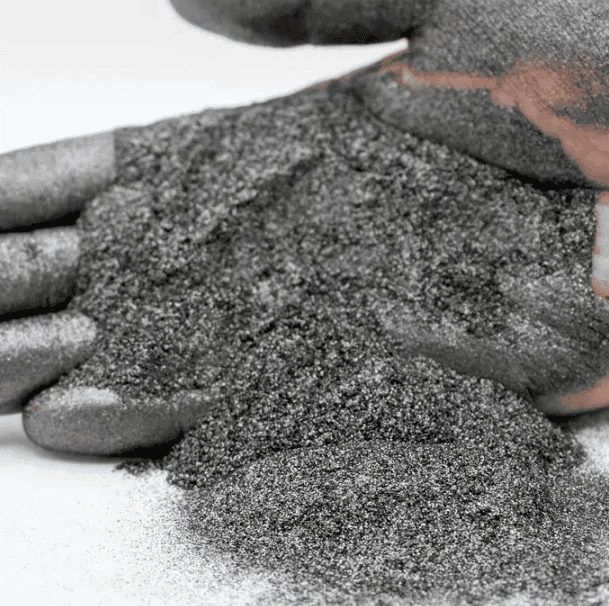
What is Flake Graphite Powder


Among the natural graphite resources, flake graphite powder (crystalline graphite) has low storage, high value, good thermal conductivity, lubricity and oxidation resistance, which is widely used in metallurgy, machinery, chemical industry, refractories, aerospace and other industries, as well as one of the essential non.


Benefits of Flake Graphite Powder


Graphene
Graphene is a kind of carbon material with a very high specific surface area and wide application potential, which is significantly superior to other products in terms of specific capacity, cost and service life.
The raw materials are mainly related to the types of products and the preparation methods. For example, raw materials of mechanical stripping, epitaxial growth, and graphite oxide reduction are all natural flake (crystalline) graphite, among which large flake graphite powder is more conducive to the generation of graphene; the raw material of graphene thin films prepared by gas deposition method is carbon-containing gas, which has nothing to do with graphite.


Expanded graphite
As a new type of functional carbon material, expanded graphite (EG) is a loose and porous worm-like material obtained by natural graphite scales after intercalation, washing, drying and high-temperature expansion. The large-scale graphite must be used to make expanded graphite, while fine-grained graphite cannot be used or is difficult to use.
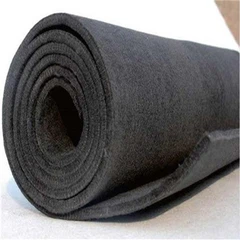
In addition to the excellent properties of natural graphite such as cold and heat resistance, corrosion resistance and self-lubrication, expanded graphite also has such characteristics as softness, compression resilience, adsorption, ecological environment coordination, biocompatibility, and radiation resistance that natural graphite does not have. Expanded graphite has a wide range of applications, and it can be used as the fireproof filler, medical dressings, but also can be processed into flexible graphite for sealing materials.


Graphite cathode battery material
Graphite has excellent conductivity, which is 100 times higher than general non-metallic minerals. It is the most widely used cathode material for lithium-ion batteries. Both flake graphite powder and artificial graphite can be used as anode materials for batteries, both of which have their advantages. However, soil-like graphite cannot be used as anode materials for batteries due to its low capacitance.
Flake graphite powder has many advantages such as low price, high electron conductivity, high lithium ion diffusion coefficient, high embedding capacity and low embedding potential. However, it has a high application threshold that requires high processing environment and processing technology of enterprises. The price of artificial graphite is high and the application threshold is low, besides, it does not require high processing technology, and is also developing rapidly. In a word, there are both crystalline graphite and artificial graphite in cell phone and camera batteries at present, and the proportion of them is similar.


Refractory material
Flake graphite powder itself has excellent thermal shock resistance and slag erosion resistance, and its products have the same high-temperature resistance, high strength properties, which are widely used in the gold industry of advanced refractories and coatings such as the ingot protection agent in steelmaking, metallurgical furnace lining, magnesia carbon brick, graphite crucible and so on.


Lubricating material
Good lubricity of graphite material comes from the graphite crystal structure. Among them, the lubricity of large-scale graphite is better than that of fine-scale graphite, the larger the graphite scale is, the lower the friction coefficient is, the better the lubricity is.
Flake graphite powder is often used as the lubricant in the mechanical industry. Graphite emulsion produced by deep processing is a good lubricant for many metal processing (wire drawing, tube drawing). In addition, lubricants are greatly reduced when used at high speed, high temperature, and high pressure, while graphite wear-resisting material can still work in 200 ~ 2000 ℃ and high speeds without lubricants. In much conveying corrosive media equipment, graphite material will also be widely used to make piston cup, sealing ring and bearing, so that the operation also do not need to add lubricants.


Why Choose us


Excellent team

Our team is experienced bringing wide knowledge to every order we received. We train our employee to ensure they posses the skills and qualifications to deliver outstanding results.


Quality Assurance

We are committed to producing and providing high-quality product. We take advanced production techniques and strict quality control measures to ensure our products have excellent performance, stable chemical composition, and reliable service life.


Experience and expertise

China Gotrays has a strong commitment to their customers. With over 15 years of experience, China Gotrays consistently seeks out innovative ways to ensure its vendors and customers achieve maximum profits.


How to Make Flake Graphite Powder


Step 1: Extraction
Graphite is usually found in underground deposits and the procedure involves mining it from these sources. You can access the graphite-rich layers by breaking through the surface of the earth with heavy machinery.
You then extract big pieces of raw graphite, full of contaminants. Normally, the quality of the graphite differs at this point.
Therefore, it will require further processing to get high-purity flake graphite powder. That is, the extraction method must be efficient and rigorous.


Step 2: Crushing and grinding
Raw graphite is first extracted then crushed into smaller, more workable fragments. Reducing the size is vital since you cannot efficiently work with large pieces of graphite.
Raw graphite is broken down by specialized crushing machines into coarse pieces. The machines use pressure in this step to transform big blocks into tiny particles. This helps the material to be handled in the future stages of production simpler.
Crushing the graphite uniformly is crucial since uneven particles can complicate the later grinding process and reduce its efficiency for your uses.
You start grinding the material into a fine powder once the graphite is crushed. This stage guarantees that the graphite particles get the exact dimensions needed for your industrial use.
Usually, you transform the crushed graphite into a fine, smooth powder using ball mills or another grinding tool. Remember, finer grades perform better in specific applications such as battery and lubricant manufacturing.
More importantly, you should ensure the powder is homogenous, with consistent size. You can achieve this by regulating the grinding process.
Apart from enhancing performance, grinding helps to maximize the flake graphite powder's adaptability for several industrial applications.


Step 3: Purification
Purification eliminates any contaminants the graphite May still have. Effective flake graphite powder cannot exist without this vital stage.
To purify the grounded graphite, you can use chemical treatments or heat. This helps to remove minerals, metals, or other non-carbon elements from the graphite.
At this stage, you May adopt several purifying cycles based on the degree of purity needed for your use.


Step 4: Flake graphite powder classification
Once refined, you must sort the flake graphite powder according to particle size. This is important depending on your application.
You will use different sieves to classify flake graphite powder grades.
For instance, you May require ultra-fine graphite for specialized or high-tech applications. Alternatively, you May choose coarse graphite to ordinary industrial uses.


Step 5: Final packaging
The last stage is packing once the flake graphite powder is classified. To protect the powder from moisture, dust, or other environmental elements likely to compromise its quality, you pack the powder in sealed, airtight containers.
Correct labelling is also very important. It helps to identify flake graphite powder characteristics, which May include grade and degree of purity of the powder.


Uses of Flake Graphite Powder
 

Refractory materials
On account of its high-temperature stability and chemical inertness, flake graphite powder is the perfect candidate for refractory material. It is used in the production of refractory bricks as well as “mag-carbon” refractory bricks (mg-c). In addition, flake graphite powder is used to produce crucibles, ladles, and molds for holding molten metals. Moreover, flake graphite powder is one of the most basic materials used in the production of functional refractories for the continuous casting of steel.
Here, flake graphite powder flake is mixed with alumina and zirconia, and then isostatically pressed to create components like stopper rods, subentry nozzles, and ladle shrouds used for regulating the flow of molten steel and also for safeguarding against oxidation. This type of material could also be used as protection for pyrometers.
In the production of iron, flake graphite powder blocks are used to produce a portion of the lining of the blast furnace. Their structural strength at high temperature, thermal shock resistance, high thermal conductivity, low thermal expansion, and good chemical resistance are highly important in this application.
The electrodes used in many electrical metallurgical furnaces are mass-produced from flake graphite powder, for instance, the electric arc furnaces used for processing steel.


Chemical industry
In the chemical sector, flake graphite powder is employed in many high-temperature applications, like in the production of phosphorus and calcium carbide in arc furnaces. Flake graphite powder is used as an anode in specific aqueous electrolytic processes such as the production of halogens (chlorine and fluorine).


Nuclear industry
Large amounts of high-purity electroflake graphite powder are used for producing moderator rods and reflector components in nuclear reactors. The suitability of electroflake graphite powder comes from its low absorption of neutrons, high thermal conductivity, and high strength at higher temperatures.


Electrical applications
Flake graphite powder is mainly used as an electrical material in the manufacture of carbon brushes in electric motors. Here, the component’s service life and performance largely depend on grade and structure.


Mechanical applications
Flake graphite powder is widely used as an engineering material across a variety of applications such as piston rings, thrust bearings, journal bearings, and vanes. Carbon-based seals are used in the fuel pumps and shafts of several aircraft jet engines.


graphite powder


What Is The Structure Of Flake Graphite Powder?

Graphite powder has a giant covalent structure in which: Each carbon atom is joined to three other carbon atoms by covalent bonds. The carbon atoms form layers with a hexagonal arrangement of atoms. The layers have weak forces between them.

Graphite powder has a layer structure that is quite difficult to draw convincingly in three dimensions. The diagram below shows the arrangement of the atoms in each layer and the way the layers are spaced.

Solid carbon comes in different forms known as allotropes depending on the type of chemical bond. The two most common are diamond and flake graphite powder.

In diamond the bonds are sp3 and the atoms form tetrahedra with each bound to four nearest neighbors. In flake graphite powder, they are sp2 orbital hybrids and the atoms form in planes with each bound to three nearest neighbors 120 degrees apart.

The individual layers are called graphene. In each layer, the carbon atoms are arranged in a honeycomb lattice with a bond length of 0.142 nm, and the distance between planes is 0.335 nm. Atoms in the plane are bonded covalently, with only three of the four potential bonding sites satisfied.


Company Introduction


Founded in 2008,China Gotrays is a family run business that prides itself in bringing quality products and service in graphite and refractory field. A leader in providing product and technique solution to many different industries. China Gotrays has a strong commitment to their customers. With over 15 years of experience, China Gotrays consistently seeks out innovative ways to ensure its vendors and customers achieve maximum profits.


The founder,Mr Tang,open the first factory in Zibo and produce graphite molds and synthetic graphite powder. For Mr tang once worked for a state-owned graphite company, he has much experience in graphite application. Gotrays grow quickly in business.


2014
For environment protection requirement, Gotrays open the natural graphite powder factory in Qingdao city and move the synthetic graphite powder production to Anshan City where they have advantage of raw material resource.


2015
Gotrays build self-owned graphite block model and invest graphite block factory ito ensure the competitive price of the whole supply chain.


2017
Gotrays open the refractory business in refractory ceramic and brick as well as silicon carbide product, and found the new business unit- Refractory ceramic business unit (RCB).


2019
Gotrays found the chance in new energy battery, and start the business of refractory products, including saggers and plates.And this business departs from RCB and become a new BU, specially for new energy battery industry.


Today, Gotrays retains the same values Old Mr Tang passed on to his son: hard work, honesty, and perseverance. While gotrays has grown year by year, the key principal of the company's value remains same, great relationships, whether by blood or by proxy, are the keys to any successful business.


Asked Questions


Q: What is the structure of flake graphite powder?

A: Graphite, mineral consisting of carbon. Graphite has a greasy feel and leaves a black mark, thus the name from the greek verb graphein, “to write.” graphite has a layered structure that consists of rings of six carbon atoms arranged in widely spaced horizontal sheets.

Q: What is the difference between graphite flakes and powder?

A: Flake graphite powder could be produce by grinding the graphite flakes. The main differences between graphite flake and flake graphite powder are morphology ,surface area and particle size. Particle size of graphite flakes is more than flake graphite powder.

Q: What is the structure of a flake graphite?

A: Flake graphite has a layered structure constituting carbon atoms in a hexagonal lattice. Each planer layer constitutes carbon atoms with sp2 configuration, each carbon atom is bonded to three other carbon atoms via covalent bonds, leaving one free electron each.

Q: What removes flake graphite powder?

A: Get the lead out: How to clean graphite stains
Erase it! That's right, try the eraser. ...
Liquid detergent. If a soft eraser failed to remove the stain, apply a few drops of liquid detergent to the affected area and rub gently with a soft, damp cloth. ...
All purpose cleaner. ...
Vegetable oil. ...
Baby wipes. ...
Toothpaste.

Q: What is the difference between natural graphite and synthetic graphite?

A: Synthetic graphite has a higher density than natural graphite with a thermal conductivity of about 700-1500w while natural graphite is about 300-700w. Price difference – Synthetic graphite is significantly more expensive than natural graphite owing to the manufacturing process which is quite energy intensive.

Q: What liquid dissolves graphite?

A: Graphite is a tough one to dissolve. I believe it can be dissolved/digested using perchloric acid with vanadium added as a catalyst (addition of vanadium is very important). The method I am most familiar with uses 1 gram of sample + 18 mL sulfuric + 15 mL conc.

Q: What is powdered graphite good for?

A: Hint: The primary uses of the graphite are for producing crucibles and other refractory products, lubricants, stove polish, paint, lead" pencils, electrodes, brake linings, batteries, powder metallurgy, fertilizers, glass manufacture, conductive coatings, and for foundry facings.

Q: What is the shelf life of flake graphite powder?

A: The product should be kept in securely closed containers during transport and storage. Adequate long term storage conditions will result in a shelf life of 2 years from the date of manufacture. Storage should be in a warm dry place out and containers should be firmly closed.

Q: What bond is flake graphite powder?

A: The type of bond in this case is known as sp2 hybridized. Note that in this new type of compound each carbon atom is attached to only three other species, as opposed to the case above (sp3) where each carbon was attached to four other species.

Q: What is the difference between flake graphite powder and graphene?

A: Graphene is a single layer of carbon atoms arranged in a hexagonal lattice, while graphite is composed of multiple layers of graphene. Graphene is a two-dimensional material, consisting of a single layer of carbon atoms arranged in a hexagonal lattice.

Q: Is flake graphite powder explosive?

A: Graphite is non-flammable in bulk form, but combustible. A reducing agent. Mixtures of graphite dust and air are explosive when ignited. Reacts violently with very strong oxidizing agents such as fluorine, chlorine dioxide, and potassium peroxide.

Q: Does flake graphite powder conduct electricity?

A: Graphite is a good conductor of heat and electricity. It has high refractoriness and stable chemical properties. Liu and wu adopted flake graphite powder to fabricate asphalt concrete with sensing properties .

Q: Can flake graphite powder be used for fingerprints?

A: Fingerprint retrieval. Fingerprints revealed by dusting them with flake graphite powder. The powder adheres to the moist prints, allowing them to be seen easily. Fingerprints are unique to every individual and can thus be used to determine whether a suspect was at a crime scene.

Q: Is flake graphite powder the same as charcoal?

A: Chemical structure. Charcoal has a considerably different chemical structure than graphite, despite both being made from carbon. The make-up of charcoal is much more non-uniform and irregular. The structure folds in on itself, which gives charcoal its soft, crumbly texture.

Q: What is the structure of flake graphite powder?

A: What is the structure of graphite? Graphite is composed of layers of carbon atoms that are arranged in 6-membered, hexagonal rings. These rings are attached to one another on their edges. Layers of fused rings can be modeled as an infinite series of fused benzene rings (without the hydrogen atoms).

Q: What degrades graphite?

A: Graphite will readily oxidize if it is exposed to oxidants at sufficiently high temperature. The oxidation process is controlled by two main factors. One is the oxidant's diffusivity though the graphite and the second is the local kinetic rate.

As one of the leading flake graphite powder manufacturers and suppliers in China, we warmly welcome you to wholesale high quality flake graphite powder at competitive price from our factory. Contact us for more details.

Alumina Ceramic Crucibles, Cordierite Mullite Crucibles, Kiln Shelf

Send Inquiry