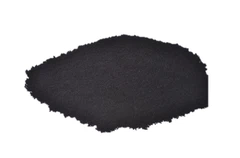
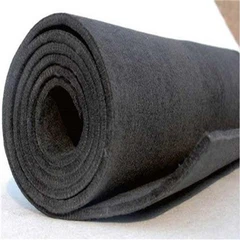
What is Silicon Carbide Composite


Silicon carbide composite are a specific application of engineering ceramic materials used to enhance aerospace applications such as turbine engine components and thermal protection systems.


Benefits of Silicon Carbide Composite


Excellent high-temperature performance: The melting point of silicon carbide composite products is as high as 2700°c, which can maintain its structural stability and strength in high-temperature environments, so it is widely used in high-temperature molten metals, high-temperature heating furnaces, high-temperature petrochemical and other fields.


Strong corrosion resistance: Silicon carbide composite has excellent corrosion resistance and can work stably for a long time in acid, alkali and oxidative environments.


High hardness and high strength: Silicon carbide composite has higher hardness and strength than traditional ceramic materials, so it has good wear resistance and impact resistance.


Excellent thermal conductivity and electrical conductivity: Silicon carbide composite has high thermal conductivity and excellent electrical conductivity, so it is widely used in the manufacture of high-power electronic components and radiators.


Why Choose us


Excellent team

Our team is experienced bringing wide knowledge to every order we received. We train our employee to ensure they posses the skills and qualifications to deliver outstanding results.


Quality Assurance

We are committed to producing and providing high-quality product. We take advanced production techniques and strict quality control measures to ensure our products have excellent performance, stable chemical composition, and reliable service life.


Experience and expertise

China Gotrays has a strong commitment to their customers. With over 15 years of experience, China Gotrays consistently seeks out innovative ways to ensure its vendors and customers achieve maximum profits.


Silicon Carbide (SiC) Beam


Processing of Silicon Carbide Composites

Silicon carbide composite are mainly processed through three different methods. However, these processing methods are often subjected to variations in order to create the desired structure or property:


Chemical Vapor Infiltration (CVI) – The CVI method uses a gas phase SiC precursor to first grow SiC whiskers or nanowires in a preform, using conventional techniques developed with CVD. Following the growth of the fibers, the gas is again infiltrated into the preform to densify and create the matrix phase. Generally, the densification rate is slow during CVI, thus this process creates relatively high residual porosity (10–15%).


Polymer Impregnation and Pyrolysis (PIP) – The PIP method uses preceramic polymers (polymeric SiC precursors) to infiltrate a fibrous preform to create a SiC matrix. This method yields low stoichiometry as well as crystallinity due to the polymer-to-ceramic conversion process (ceramization). Additionally, shrinkage also occurs during this conversion process, resulting in 10–20% residual porosity. Multiple infiltrations can be performed to compensate for the shrinkage.


Melt Infiltration (MI) – The MI method has several variations, including using a dispersion of SiC particulate slurry to infiltrate into the fiberous preform, or using CVI to coat carbon on the SiC fibers, followed with infiltrating liquid Si to react with the carbon to form SiC. With these methods, chemical reactivity, melt viscosity, and wetting between the two components should be considered carefully. Some issues with infiltrating melted Si is that the free Si can lower the silicon carbide composite resistance to oxidation and creep. However, this technique usually yields lower residual porosity (~5%) compared to the other two techniques due to higher densification rates.


Properties of Silicon Carbide Composites


Mechanical
Mechanical properties of silicon carbide composite, including SiC–SiC composites can vary depending on the properties of their various components, namely, the fiber, matrix, and interphases. For example, the size, composition, crystallinity, or alignment of the fibers will dictate the properties of the composite. The interplay between matrix microcracking and fiber-matrix debonding often dominates the failure mechanism of silicon carbide composite. This results in silicon carbide composite having non-brittle behavior despite being fully ceramic. Additionally, creep rates at high temperatures are also extremely low, but still dependent on its various constituents.


Thermal
Silicon carbide composite have a relatively high thermal conductivity and can operate at very high temperatures due to their inherently high creep and oxidation resistance. Residual porosity and stoichiometry of the material can vary its thermal conductivity, with increasing porosity leading to lower thermal conductivity and presence of Si–O–C phase also leading to lower thermal conductivity. In general, a typical well processed silicon carbide composite can achieve a thermal conductivity of around 30 W/m-K at 1,000 °C (1,830 °F).


Chemical
Since silicon carbide composite are generally sought for in high temperature applications, their oxidation resistance is of high importance. The oxidation mechanism for silicon carbide composite vary depending on the temperature range, with operation in the higher temperature range (>1000 °C) being more beneficial than at lower temperatures (<1000 °C). In the former case, passive oxidation generates a protective oxide layer wheres in the latter case, oxidation degrades the fiber-matrix interface. Nonetheless, oxidation is an issue and environmental barrier coatings are being investigated to address this issue.


Application of Silicon Carbide Composite
 

Silicon carbide composite in power electronics
Power electronics is one of the most significant areas where silicon carbide composite (sic) is making a profound impact. The superior properties of silicon carbide composite enable the creation of power devices that are more efficient, smaller, and more robust than those made from silicon.


High-efficiency power devices
One of the primary advantages of silicon carbide composite in power electronics is its ability to handle higher voltages and temperatures. Sic-based power devices, such as mosfets and diodes, can operate at voltages exceeding 10kv, significantly higher than their silicon counterparts. This high-voltage capability makes sic ideal for applications in electric vehicles (evs), renewable energy systems, and industrial power supplies.


High-frequency operation
Another significant benefit of silicon carbide composite in power electronics is its ability to operate at higher frequencies. Sic's high electron mobility and low intrinsic carrier concentration enable faster switching speeds, which is particularly beneficial in applications like power supplies, rf amplifiers, and telecommunications. Higher switching frequencies allow for smaller passive components, such as inductors and capacitors, leading to more compact and lightweight systems.


Silicon carbide composite in high-temperature electronics
The ability of silicon carbide composite to withstand extreme temperatures makes it an ideal material for high-temperature electronics. In environments where traditional silicon-based devices would fail, sic continues to perform, opening up new possibilities in industries such as aerospace, defense, and oil and gas.


Aerospace and defense applications
In aerospace and defense, the need for electronics that can operate reliably in harsh conditions is paramount. Silicon carbide composite's high thermal conductivity and thermal stability make it an excellent material for high-temperature sensors, power devices, and communication systems used in aircraft, satellites, and missile systems.
For example, in satellite technology, sic-based power amplifiers can operate at higher temperatures and frequencies, enabling more efficient and reliable communication in space. Additionally, sic's radiation hardness—its resistance to damage from radiation—makes it suitable for use in environments with high levels of ionizing radiation, such as outer space or nuclear reactors.


Oil and gas industry
The oil and gas industry also benefits from silicon carbide composite's high-temperature capabilities. In exploration and drilling operations, electronics are often exposed to extreme heat and pressure. Sic-based sensors and power electronics can operate reliably in these conditions, providing accurate data and controlling equipment without the need for extensive cooling systems.
Silicon carbide composite is also used in downhole drilling tools, where it enhances the performance and longevity of equipment. Sic's hardness and resistance to wear and corrosion make it an ideal material for components that must endure the harsh conditions found deep underground.


Company Introduction


Founded in 2008,China Gotrays is a family run business that prides itself in bringing quality products and service in graphite and refractory field. A leader in providing product and technique solution to many different industries. China Gotrays has a strong commitment to their customers. With over 15 years of experience, China Gotrays consistently seeks out innovative ways to ensure its vendors and customers achieve maximum profits.


The founder,Mr Tang,open the first factory in Zibo and produce graphite molds and synthetic graphite powder. For Mr tang once worked for a state-owned graphite company, he has much experience in graphite application. Gotrays grow quickly in business.


2014
For environment protection requirement, Gotrays open the natural graphite powder factory in Qingdao city and move the synthetic graphite powder production to Anshan City where they have advantage of raw material resource.


2015
Gotrays build self-owned graphite block model and invest graphite block factory ito ensure the competitive price of the whole supply chain.


2017
Gotrays open the refractory business in refractory ceramic and brick as well as silicon carbide product, and found the new business unit- Refractory ceramic business unit (RCB).


2019
Gotrays found the chance in new energy battery, and start the business of refractory products, including saggers and plates.And this business departs from RCB and become a new BU, specially for new energy battery industry.


Today, Gotrays retains the same values Old Mr Tang passed on to his son: hard work, honesty, and perseverance. While gotrays has grown year by year, the key principal of the company's value remains same, great relationships, whether by blood or by proxy, are the keys to any successful business.


Asked Questions


Q: What is the shelf life of silicon carbide composite?

A: Silicon carbide composite do not have a known shelf life. As long as the product is maintained in the original sealed container and stored in a cool, dry, ventilated area, our product will last indefinitely.

Q: What are the point defects of silicon carbide composite?

A: The silicon vacancy (vsi) and the carbon vacancy (vc) in spite of substantial efforts, rather few point defects in sic are unambiguously identified both experimentally and theoretically with respect to atomic structure, optical, paramagnetic, and electronic properties.

Q: Does silicon carbide composite dissolve in water?

A: Insoluble in water. Soluble in molten alkalis (naoh, koh) and molten iron.

Q: At what temperature does silicon carbide composite decompose?

A: The high-pressure decomposition temperatures measured are considerably lower than those at ambient, with our measurements indicating that sic begins to decompose at ∼2000 k at 60 gpa as compared to ∼2800 k at ambient pressure.

Q: Can silicon carbide composite oxidize?

A: At high temperatures, silicon carbide composite undergoes passive and active oxidation, which contribute to its degradation. Passive oxidation is responsible for both the formation of a silica layer on the top of the surface and for the active oxidation for the release of volatile oxides.

Q: What happens when silicon carbide composite is heated in oxygen?

A: Oxidation of silicon carbide composite can be either active or passive. Active oxidation reduces the strength of the samples whereas passive oxidation leads to the formation of coher- ent silica layer over silicon carbide composite surface, thereby improving its performances in several appli- cations.

Q: Is silicon carbide composite electrically conductive?

A: Silicon carbide composite is normally an electrically semiconducting material (105 - 107 ohm*cm).

Q: How fragile is silicon carbide composite?

A: Although brittle in nature, silicon carbide composite ceramics are leading materials for rotating and static components in many mechanical applications. They are characterized by low fracture toughness and limited strain-to-failure as compared to metals.

Q: Is silicon carbide composite magnetic?

A: Normally, sic is diamagnetic but defect-induced fm May occur when the α-sic is exposed to xe ion radiation or fast heavy ions . It was also reported that β-sic becomes ferromagnetic when it is doped with al . On the other hand, fm state could be reduced by doping of vanadium carbide .

Q: What are the point defects of silicon carbide composite?

A: The silicon vacancy (vsi) and the carbon vacancy (vc) in spite of substantial efforts, rather few point defects in sic are unambiguously identified both experimentally and theoretically with respect to atomic structure, optical, paramagnetic, and electronic properties.

Q: Does silicon carbide composite dissolve in water?

A: Insoluble in water. Soluble in molten alkalis (naoh, koh) and molten iron.

Q: At what temperature does silicon carbide composite decompose?

A: The high-pressure decomposition temperatures measured are considerably lower than those at ambient, with our measurements indicating that sic begins to decompose at ∼2000 k at 60 gpa as compared to ∼2800 k at ambient pressure.

Q: Can silicon carbide composite oxidize?

A: At high temperatures, silicon carbide composite undergoes passive and active oxidation, which contribute to its degradation. Passive oxidation is responsible for both the formation of a silica layer on the top of the surface and for the active oxidation for the release of volatile oxides.

Q: What happens when silicon carbide composite is heated in oxygen?

A: Oxidation of silicon carbide composite can be either active or passive. Active oxidation reduces the strength of the samples whereas passive oxidation leads to the formation of coher- ent silica layer over silicon carbide composite surface, thereby improving its performances in several appli- cations.

Q: Is silicon carbide composite electrically conductive?

A: Silicon carbide composite is normally an electrically semiconducting material (105 - 107 ohm*cm).

Q: How fragile is silicon carbide composite?

A: Although brittle in nature, silicon carbide composite ceramics are leading materials for rotating and static components in many mechanical applications. They are characterized by low fracture toughness and limited strain-to-failure as compared to metals.

Q: What is the thermal shock of silicon carbide composite?

A: Sic material can withstand thermal shock due to the high thermal conductivity and low thermal expansion of sic. The thermal conductivity of sic is in the range of 120-270 w/mk and thermal expansion is 4.0x10⁻⁶/°c, which is less than most semiconductor materials.

Q: Does silicon carbide composite react with water?

A: However, it has been known that sic reacts with water to form silica and gasses at temperatures as low as 700 k at very low pressure .

Q: Is silicon carbide composite flammable?

A: Silicon carbide composite itself does not burn. * if employees are expected to fight fires, they must be trained and equipped as stated in the osha fire brigades standard (29 cfr 1910.156). If silicon carbide composite is spilled, take the following steps: * evacuate personnel and secure and control entrance to the area.

Q: Will silicon carbide composite scratch glass?

A: Diamond is the only natural abrasive that can scratch glass, but it is obviously too expensive and rare of a material to use for simple applications like this. Silicon carbide composite is a much more affordable abrasive grain that has many uses, including sanding glass.

As one of the leading silicon carbide composite manufacturers and suppliers in China, we warmly welcome you to wholesale high quality silicon carbide composite at competitive price from our factory. Contact us for more details.

Clay Graphite Crucible, Sic Crucible, Quartz Crucible

Send Inquiry