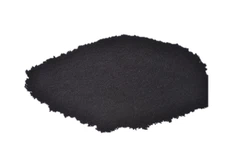
What is Carbon Nanotube Powder


Carbon nanotube powder (CNT powder) refers to a fine, powdered form of carbon nanotubes (CNTs). Carbon nanotubes are cylindrical structures composed of carbon atoms arranged in a hexagonal lattice. They can be single-walled carbon nanotubes (SWCNT/SWNT) or multi-walled carbon nanotubes (MWCNT/MWNT). The powder form of carbon nanotubes consists of a large number of individual nanotubes, which are typically entangled or aggregated together.


Benefits of Carbon Nanotube Powder


High aspect ratio
Carbon nanotube powder have an extremely high aspect ratio, from 50 for MWCNTs up to 10,000 and more for SWCNTs, with lengths typically ranging from micrometers to 1 millimeter while having diameters in the nanometer scale (usually 1–2 for SWCNTs and 7–100 for MWCNTs).This high aspect ratio provides unique structural characteristics and enables exceptional mechanical properties such as high strength and flexibility.


Exceptional mechanical properties
Carbon nanotubes exhibit a high tensile strength of 40–100 GPa and elastic modulus up to 3,000 GPa.They are known to be stronger than steel while being significantly lighter in weight. These properties make CNT powder attractive for enhancing the mechanical performance of various materials and creating lightweight structures.


Electrical conductivity
Carbon nanotube powder are excellent conductors of electricity, possessing high electrical conductivity.They can efficiently transport electrons at high current density due to their one-dimensional structure, which makes carbon nanotube powder suitable for applications in electronics, sensors, and energy devices where electrical conduction is critical. The minimum working dosage for the required conductivity of composites starts from 0.01% for SWCNTs and 0.5% for MWCNTs.


Thermal conductivity
Carbon nanotubes have exceptionally high thermal conductivity, enabling efficient heat transfer: near κ = 3,500 Wm-1K-1 at room temperature.11 They can effectively conduct and dissipate heat, making them valuable for applications in thermal management, textiles, electronics, construction, etc.


Large surface area
Thanks to nanotubes’ structure and physical form, carbon nanotube powder possesses a large surface area, which facilitates interactions with other materials and enhances surface-based phenomena.This property is advantageous for applications such as energy storage devices, catalyst supports, and adsorption-based systems.


Optical properties
Depending on their structure and chirality, carbon nanotubes can exhibit unique optical properties, including absorption, emission, and light scattering. These optical properties have potential applications in optoelectronics, photovoltaics, and sensing technologies.


Why Choose us


Excellent team

Our team is experienced bringing wide knowledge to every order we received. We train our employee to ensure they posses the skills and qualifications to deliver outstanding results.


Quality Assurance

We are committed to producing and providing high-quality product. We take advanced production techniques and strict quality control measures to ensure our products have excellent performance, stable chemical composition, and reliable service life.


Experience and expertise

China Gotrays has a strong commitment to their customers. With over 15 years of experience, China Gotrays consistently seeks out innovative ways to ensure its vendors and customers achieve maximum profits.


How is Carbon Nanotube Powder Manufactured?


There are three main ways to produce this product: Arc discharge, laser ablation of graphite, and chemical vapor deposition (CVD). All three methods require the use of metals (e.g., iron, cobalt, nickel) as catalysts.2 In the first two processes, graphite is combusted electrically or by means of a laser, and the CNTs that develop in the gaseous phase are separated.
plasma arc discharge: Production of carbon nanotubes in an arc discharge plasma in a helium atmosphere
laser evaporation (pulsed laser ablation): Evaporation of a graphite target in a high-temperature reaction by the action of a puled laser

chemical vapor deposition (CVD): Catalytic (nickel, cobalt, iron or their combinations) deposition of carbon from hydrocarbons (methane, ethylene, acetylene)


The most common method is CVD, where carbon-containing gases are decomposed on a catalyst to form nanotubes. Here is a general overview of the carbon nanotube powder manufacturing process:

CVD synthesis
The catalyst-coated substrate is placed inside a unit chamber, and the CVD process is initiated. The chamber is typically maintained at high temperatures (around 500–1,000°C) and a carbon-containing gas is introduced.1 The most commonly used method is thermal decomposition of the carbon feedstock, where the carbon atoms from the gas decompose on the catalyst surface. Carbon atoms from the feedstock react with the catalyst, leading to the growth of carbon nanotubes. The CNTs grow vertically from the catalyst particles, forming a forest-like structure. However, this method has its drawbacks, including limited synthesis volume and high costs. As a solution, OCSiAl has developed and patented a pioneering advanced method for producing catalytic metal nanoparticles. In this method, CNTs are produced within the gas phase of synthesis while being suspended inside the chamber of the unit, allowing a production capacity in the flow unit of several kilograms per hour.3 This cost-effective technology makes it possible to offer the market TUBALLTM nanotubes at a significantly lower price than their counterparts.

Carbon nanotube powder collection
After synthesis, the CNTs are typically collected from the substrate. Various methods can be used for this purpose, including scraping, mechanical agitation, ultrasonication, filtration, or centrifugation.

Carbon nanotube powder purification
For many applications, residual iron nanoparticles do not pose a problem, but for some it is very undesirable. In this case, carbon nanotube powder purification is applied. The collected CNT material undergoes purification steps to remove catalyst residues, amorphous carbon, and other impurities. Common purification methods include acid treatment, thermal oxidation, chemical functionalization, and electric chemical purification.5 Post-processing techniques such as milling or grinding can be employed to break up agglomerates and obtain a fine powder.

Carbon nanotube powder quality control
The carbon nanotube powder is analyzed and characterized to assess its structural, morphological, and purity properties. Techniques such as scanning electron microscopy (SEM), transmission electron microscopy (TEM), Raman spectroscopy, thermogravimetric analysis (TGA), and UV-VIS-NIR spectroscopy are commonly used for characterization.
It's important to note that variations in the manufacturing process exist, depending on the specific requirements and techniques employed by different research groups and companies.


Carbon Nanotube For Rubber


Application of Carbon Nanotube Powder

Electronics
One of the most promising applications of carbon nanotube powder is in the electronics sector. Carbon nanotube powder are utilized in the development of advanced transistors, displays, and sensors. Their excellent electrical conductivity and small size allow for the miniaturization of electronic components, leading to faster and more efficient devices. For instance, carbon nanotube powder are showing potential in developing next-generation computing technologies, making them a hot topic in research circles.


Aerospace and Defense
The aerospace industry is increasingly adopting carbon nanotube powder due to its lightweight and high-strength properties. Using CNTs in composite materials reduces the overall weight of aircraft, improving fuel efficiency and performance. Additionally, the defense sector is leveraging carbon nanotube powder for advanced materials that can withstand extreme conditions while maintaining structural integrity. This is crucial for applications in military vehicles and equipment, where reliability is paramount.


Automotive
In the automotive industry, carbon nanotube powder is being explored for various applications, including batteries, fuel cells, and lightweight composite materials. Carbon nanotube powder enhance the performance of lithium-ion batteries, providing higher energy density and longer life cycles. As electric vehicles (EVs) gain popularity, the demand for efficient energy storage solutions is driving the need for carbon nanotube powder-enhanced batteries, contributing to the growth of the carbon nanotube powder market.


How To Store And Transport Carbon Nanotube Powder


With the continuous development of nanotechnology, carbon nanotube powders have been increasingly widely used. However, during storage and transportation, carbon nanotube powders also face some problems, such as poor thermal stability and easy oxidation and heating. Therefore, we must take some measures to ensure the safe storage and transportation of carbon nanotube powders.


In order to ensure the stability of carbon nanotube powders, effective passivation measures must be taken during storage and transportation. Normally, we can achieve passivation treatment by inflating inert gas. Specifically, we can slowly fill the device with inert gas containing a small amount of air (about 1%) to maintain a stable oxide film thickness on the powder surface. During the inflation process, the selection of inflation speed, inflation amount, and passivation time is also crucial. It is necessary to flexibly adjust according to different powder characteristics to achieve the best passivation effect.


At the same time, we also need to pay attention to some details during the storage and transportation of carbon nanotube powders. For example, in storage containers, they must be kept sealed and placed in a dark, low humidity, well ventilated area to avoid moisture, heat, and direct sunlight. During transportation, it is necessary to strengthen vibration protection to prevent powder agglomeration caused by vibration, which can affect its performance.


In summary, the storage and transportation of carbon nanotube powders is a complex and rigorous process that requires us to fully understand the characteristics of carbon nanotube powders and take corresponding safety measures to ensure the safe storage and transportation of carbon nanotube powders.


Company Introduction


Founded in 2008,China Gotrays is a family run business that prides itself in bringing quality products and service in graphite and refractory field. A leader in providing product and technique solution to many different industries. China Gotrays has a strong commitment to their customers. With over 15 years of experience, China Gotrays consistently seeks out innovative ways to ensure its vendors and customers achieve maximum profits.


The founder,Mr Tang,open the first factory in Zibo and produce graphite molds and synthetic graphite powder. For Mr tang once worked for a state-owned graphite company, he has much experience in graphite application. Gotrays grow quickly in business.


2014
For environment protection requirement, Gotrays open the natural graphite powder factory in Qingdao city and move the synthetic graphite powder production to Anshan City where they have advantage of raw material resource.


2015
Gotrays build self-owned graphite block model and invest graphite block factory ito ensure the competitive price of the whole supply chain.


2017
Gotrays open the refractory business in refractory ceramic and brick as well as silicon carbide product, and found the new business unit- Refractory ceramic business unit (RCB).


2019
Gotrays found the chance in new energy battery, and start the business of refractory products, including saggers and plates.And this business departs from RCB and become a new BU, specially for new energy battery industry.


Today, Gotrays retains the same values Old Mr Tang passed on to his son: hard work, honesty, and perseverance. While gotrays has grown year by year, the key principal of the company's value remains same, great relationships, whether by blood or by proxy, are the keys to any successful business.


Asked Questions


Q: What is carbon nanotube powder used for?

A: They can efficiently transport electrons at high current density due to their one-dimensional structure, which makes carbon nanotube powder suitable for applications in electronics, sensors, and energy devices where electrical conduction is critical.

Q: Are carbon nanotube powder flammable?

A: As is known, as a typical carbon material, pristine CNTs are easy to catch fire in air at high temperatures.

Q: Can carbon nanotube powder break?

A: Under excessive tensile strain, the tubes will undergo plastic deformation, which means the deformation is permanent. This deformation begins at strains of approximately 5% and can increase the maximum strain the tubes undergo before fracture by releasing strain energy.

Q: Is carbon nanotube safe?

A: Carbon nanotube powder (CNTs) hold great promise to create new and better products, but their adverse health effect is a major concern. Human exposure to CNTs is primarily through inhalation and dermal contact, especially during the manufacturing and handling processes.

Q: What dissolves carbon nanotube powder?

A: Once the carbon nanotube powder are dissolved in these aromatic amines, the carbon nanotube powder can be readily dissolved in other polar or nonpolar organic solvents, including but not limited to solvents such as chloroform, acetone, toluene, benzene, methanol, ethanol, DMF, TMF, and the like.

Q: Can carbon nanotube powder melt?

A: CNTs were found to withstand high temperatures, up to the melting point of 60-nm-diameter W particles (∼3400 K).

Q: Are carbon nanotube powder waterproof?

A: Among these materials, carbon nanotube powder (CNTs) are expected to exhibit high hydrophobicity. Molecular dynamics (MD) simulations have demonstrated that CNTs exhibit high water repellency regardless of chirality .

Q: What is the best solvent for carbon nanotube powder?

A: Ethylene glycol is the most efficient solvent due to its two polar OH groups and improved the fibre strength to 1.45 GPa. Long chain or cross-linked polymers like polyvinyl alcohol, polyimide, and bismaleimide (BMI) were introduced into CNT fibres by infiltration with aid of polar solvents.

Q: Is carbon nanotube powder antibacterial?

A: Antimicrobial properties of carbon nanotube powder. Based on some research, SWCNTs can exhibit excellent antimicrobial activity.

Q: How do you destroy carbon nanotube powder?

A: Direct treatment of aqueous dispersions with sodium hypochlorite solution completely degraded CNTs into carbon oxides or carbonates ions.

Q: At what temperature does carbon nanotube powder burn?

A: It is known that CNTs burn in air between 500–800°C depending on their diameter, number of walls and amount of defects whereby small tubes burn at lower temperatures .

Q: Can carbon nanotube powder absorb radiation?

A: The optical properties of carbon nanotube powder are highly relevant for materials science. The way those materials interact with electromagnetic radiation is unique in many respects, as evidenced by their peculiar absorption, photoluminescence (fluorescence), and Raman spectra.

Q: What is the composition of carbon nanotube powder?

A: Carbon nanotube powder (CNTs) are a type of carbon with a diameter of nanometers and a length of micrometres (where the length to diameter ratio exceeds 1000). CNT is made up of enrolled cylindrical graphitic sheets (named graphene) wrapped up into a seamless cylinder with a nanometer-sized diameter.

As one of the leading carbon nanotube powder manufacturers and suppliers in China, we warmly welcome you to wholesale high quality carbon nanotube powder at competitive price from our factory. Contact us for more details.

Corundum Crucibles, Graphite Crucible With Lid, Fused Quartz Plate

Send Inquiry