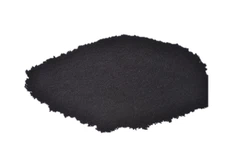
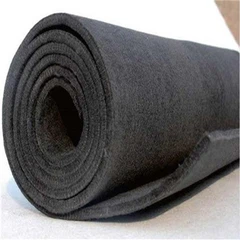
What is CNT Master Batch


CNT master batch (CNTs) are carbon-based nanomaterials with a tubular structure composed of rolled up graphene sheets. These tubes can consist of single or multiple graphene layers. CNTs share the same π-bond character as graphene, allowing electrons to be delocalized throughout the structure.


Benefits of CNT Master Batch


Electrical Conductivity – CNT master batch (CNTs) are electrically and thermally conductive and have a high mechanical strength. Parallel arrays of multi-walled CNT master batch (CNT forests) can be drawn into electrically conductive continuous length webs.


Strength And Elasticity – In terms of tensile strength and elastic modulus, CNT master batch are the strongest and stiffest materials yet found.


Thermal Conductivity And Expansion – The carbon bond's rigidity aids in the transmission of vibrations throughout the nanotube, resulting in excellent heat conductivity. Because each carbon atom is connected to three other carbon atoms by strong covalent bonds, CNT master batch have an extremely high melting point. This also leaves a spare electron on each carbon atom, resulting in a sea of delocalized electrons within the tube, allowing nanotubes to conduct electricity.


Electron Emission – Because each carbon atom is connected to three other carbon atoms by strong covalent bonds, CNT master batch have an extremely high melting point. This also means that each carbon atom has an extra electron, forming a sea of delocalized electrons within the tube, allowing nanotubes to conduct electricity.


Why Choose us


Excellent team

Our team is experienced bringing wide knowledge to every order we received. We train our employee to ensure they posses the skills and qualifications to deliver outstanding results.


Quality Assurance

We are committed to producing and providing high-quality product. We take advanced production techniques and strict quality control measures to ensure our products have excellent performance, stable chemical composition, and reliable service life.


Experience and expertise

China Gotrays has a strong commitment to their customers. With over 15 years of experience, China Gotrays consistently seeks out innovative ways to ensure its vendors and customers achieve maximum profits.


Application of CNT Master Batch


Electronics and Nanoelectronics: CNT master batch are used in the development of high-performance electronic devices such as transistors, sensors, and interconnects. Their excellent electrical conductivity and unique electronic properties make them promising candidates for advancing electronic components to smaller sizes and greater efficiencies.

Materials Reinforcement: CNT master batch are employed as reinforcing agents in composite materials, enhancing mechanical strength, stiffness, and thermal conductivity. These composites find applications in aerospace, automotive, and construction industries, leading to the development of lightweight and strong materials.

Energy Storage (Batteries and Supercapacitors): CNT master batch are integrated into electrodes in lithium-ion batteries and supercapacitors to improve electrical conductivity, charge/discharge rates, and overall performance. They contribute to the development of energy storage devices with higher capacity, faster charging times, and longer lifespan.


Conductive Films and Coatings: CNT master batch and coatings are used to create conductive layers with applications in touchscreens, flexible electronics, and anti-static materials. The transparency and electrical conductivity of CNT master batch films make them valuable in electronic displays and sensors.


Medical Imaging and Drug Delivery: Functionalized CNT master batch are explored for use in medical imaging as contrast agents. Additionally, CNT master batch are used in drug delivery systems where they can transport therapeutic agents to specific locations in the body, offering targeted and controlled release.

Sensors (Gas and Biosensors): CNT master batch are employed in the development of gas sensors that can detect various gases at low concentrations. They are also used in biosensors for the detection of biomolecules, viruses, and bacteria. The high surface area and sensitivity of CNT master batch make them ideal for such applications.

Water Purification: CNT master batch are utilized in water purification processes due to their ability to adsorb contaminants and pollutants. They can remove heavy metals, organic pollutants, and other impurities from water sources, contributing to environmental remediation.

Aerospace and Composite Materials: CNT master batch are incorporated into composite materials for aerospace applications. Their lightweight and strong properties make them valuable in the development of aircraft components, reducing overall weight without compromising structural integrity.


Flexible and Wearable Electronics: CNT master batch enable the creation of flexible and lightweight electronic components suitable for wearable devices. They are used in flexible displays, sensors, and electronic textiles, allowing for comfortable and versatile electronic integration.

Thermal Management (Heat Dissipation): CNT master batch possess excellent thermal conductivity, making them effective in thermal management applications. They are used as heat sinks in electronic devices to dissipate heat, preventing overheating and enhancing the overall reliability and performance of electronics.


Methods of CNT Master Batch Manufacturing

Arc Discharge:

Arc discharge is one of the earliest methods developed for producing CNT master batch. In this technique, a high electrical current is passed between two graphite electrodes in an inert gas atmosphere, typically helium. The intense heat generated by the arc vaporizes the graphite electrodes, leading to the formation of a carbon plasma. Carbon atoms from the plasma then condense to form CNT master batch on the cooler surfaces of the reactor chamber. Arc discharge is known for its simplicity and relatively low cost, but it produces a mixture of carbon structures, including CNT master batch, nanofibers, and amorphous carbon, making purification challenging.

Laser Ablation:

Laser ablation involves the use of a high-power laser to vaporize a graphite target in a high-temperature furnace filled with an inert gas, such as argon or helium. The laser beam heats the graphite target to extreme temperatures, causing it to evaporate and form a plasma plume. Carbon atoms within the plasma rapidly cool and condense to form CNT master batch on a substrate placed downstream from the graphite target. Laser ablation offers precise control over the synthesis parameters and enables the production of high-purity CNT master batch with defined structural properties. However, it is limited by its low production yield and scalability challenges.

CNT Masterbatch
CNT Masterbatch

Chemical Vapor Deposition (CVD):

Chemical vapor deposition (CVD) is a widely used method for the large-scale synthesis of CNT master batch with controlled properties. In CVD, hydrocarbon gases, such as methane or ethylene, are introduced into a high-temperature furnace along with a catalyst, typically transition metal nanoparticles like iron, cobalt, or nickel supported on a substrate, such as silicon or quartz. The hydrocarbon gases decompose in the presence of the catalyst at elevated temperatures, forming carbon radicals. These radicals then recombine and grow into CNT master batch on the catalyst surface. CVD offers excellent scalability, controllability, and the ability to produce high-quality CNT master batch with tailored properties.

Catalytic Chemical Vapor Deposition (CCVD):

Catalytic chemical vapor deposition (CCVD), also known as floating catalyst CVD, is a variation of the CVD method that involves the introduction of catalyst nanoparticles into the reaction chamber as a fine powder or aerosol. The catalyst nanoparticles act as nucleation sites for CNT master batch growth, facilitating the formation of vertically aligned nanotube arrays.


Five Innovations Made Possible With CNT Master Batch
 

Lighter-Weight Coax Cables for Space Vehicles
Spacecraft, aircraft, and missiles use a large amount of coaxial cables, which can really weigh them down. Anytime you're trying to make something fly, reducing weight can make a big difference in the performance and overall cost.


Thermal Gaskets for Cooling Electronics
A common challenge in aerospace engineering is transferring heat away from electronics to avoid overheating. One way to enhance heat transfer is to have many contact points in a gasket that connect the heat dissipating chips to the heat sink.


Stray Light Absorption
When you want to observe something in space, you need to block out the stray light from the sun so you can get a good image of the object you're observing. Telescopes and star trackers are usually painted or coated with a black material to absorb the stray light.
CNT master batch grow in a forest-like structural morphology called a vertical array, with the long, narrow tubes standing tall in rows.


Radiation Shields
Radiation protection is critical in space, where protons, electrons and cosmic rays can harm people and electronics. The electronics in satellites are typically encased in aluminum shields that provide a physical barrier for radiation — but there's always room for improvement.


3D-Printing Composite Material
Another huge challenge in space is electrostatic discharge (ESD). Any item that is being designed for space has to be ESD-safe. This is usually achieved by using conductive materials, such as silver, to spread out any charges that would otherwise build up and potentially cause damage. Due to their large aspect ratio, CNT master batch are able to form an electrical network at a low concentration which facilitates the 3D printing of composite parts. Therefore, even if CNTs make up only 2% of the weight of a composite, they can make a plastic material conductive enough to be used in space.


Company Introduction


Founded in 2008,China Gotrays is a family run business that prides itself in bringing quality products and service in graphite and refractory field. A leader in providing product and technique solution to many different industries. China Gotrays has a strong commitment to their customers. With over 15 years of experience, China Gotrays consistently seeks out innovative ways to ensure its vendors and customers achieve maximum profits.


The founder,Mr Tang,open the first factory in Zibo and produce graphite molds and synthetic graphite powder. For Mr tang once worked for a state-owned graphite company, he has much experience in graphite application. Gotrays grow quickly in business.


2014
For environment protection requirement, Gotrays open the natural graphite powder factory in Qingdao city and move the synthetic graphite powder production to Anshan City where they have advantage of raw material resource.


2015
Gotrays build self-owned graphite block model and invest graphite block factory ito ensure the competitive price of the whole supply chain.


2017
Gotrays open the refractory business in refractory ceramic and brick as well as silicon carbide product, and found the new business unit- Refractory ceramic business unit (RCB).


2019
Gotrays found the chance in new energy battery, and start the business of refractory products, including saggers and plates.And this business departs from RCB and become a new BU, specially for new energy battery industry.


Today, Gotrays retains the same values Old Mr Tang passed on to his son: hard work, honesty, and perseverance. While gotrays has grown year by year, the key principal of the company's value remains same, great relationships, whether by blood or by proxy, are the keys to any successful business.


Asked Questions


Q: What is the manufacturing process of CNT master batch?

A: Techniques have been developed to produce carbon nanotubes (CNTs) in sizable quantities, including arc discharge, laser ablation, high-pressure carbon monoxide disproportionation, and chemical vapor deposition (CVD). Most of these processes take place in a vacuum or with process gases.

Q: How do you dissolve CNT master batch

A: Once the carbon nanotubes are dissolved in these aromatic amines, the carbon nanotubes can be readily dissolved in other polar or nonpolar organic solvents, including but not limited to solvents such as chloroform, acetone, toluene, benzene, methanol, ethanol, DMF, TMF, and the like.

Q: What are the raw materials for CNT master batch?

A: Presently, carbon nanomaterials such as graphene and carbon nanotubes have been prepared from cheap carbon-based materials such as dry ice and Pongamia oil.

Q: How is CNT master batch master batch prepared by arc discharge?

A: In the arc discharge synthesis of CNT master batch, Bethune and co-workers40 used thin electrodes with bored holes filled with a mixture of pure powdered metals (Fe, Ni, or Co) and graphite as anodes. The electrodes were vaporized with a current of 95–105 A in 100–500 Torr of helium gas.

Q: How to functionalize carbon nanotubes?

A: The CNT master batch are functionalized non-covalently by aromatic compounds, surfactants, and polymers, employing π - π stacking or hydrophobic interactions for the most part.

Q: What is the best solvent for carbon nanotubes?

A: Ethylene glycol is the most efficient solvent due to its two polar OH groups and improved the fibre strength to 1.45 GPa. Long chain or cross-linked polymers like polyvinyl alcohol, polyimide, and bismaleimide (BMI) were introduced into CNT master batch fibres by infiltration with aid of polar solvents.

Q: Is CNT master batch soluble in water?

A: Most polymer wrapping methods depend on the physical adsorption of the polymer on the surface of the CNT master batch to increase the solubility of the nanotubes.

Q: Is CNT master batch stronger than graphene?

A: Although they share numerous similar properties, each has its unique uses and applications. 3. Strength wise they differentiate as “Graphene is far superior to carbon nanotubes or any other known nanofiller in transferring its exceptional strength and mechanical properties to a host material.”

Q: What is the process of CNT master batch?

A: It involves the evaporation of one electrode as cations followed by deposition at the other electrode. This plasma-based process is analogous to the more familiar electroplating process in a liquid medium. The fullerenes and CNT master batch are formed by plasma arcing of carbonaceous materials, particularly graphite.

Q: What is the new material in CNT master batch?

A: Carbon nanotubes are the strongest and stiffest materials yet discovered in terms of tensile strength and elastic modulus. This strength results from the covalent sp2 bonds formed between the individual carbon atoms.

Q: How do you purify CNT master batch?

A: In gas phase oxidative purification, CNT master batch are purified by oxidizing carbonaceous impurities at a temperature ranging from 225 °C to 760 °C under an oxidizing atmosphere.

Q: At what temperature does carbon nanotubes burn?

A: It is known that CNT master batch burn in air between 500–800°C depending on their diameter, number of walls and amount of defects whereby small tubes burn at lower temperatures.

Q: How do you functionalize carbon nanotubes?

A: In order to achieve such functionalization, CNT master batch can be oxidized using strong acids, resulting in the reduction of their length while generating carboxylic groups, thus increasing their dispersibility in aqueous solutions.

Q: What are the surfactants for CNT master batch?

A: Surfactants such as sodium dodecyl sulfate (SDS) are used to improve the dispersity of carbon nanotubes (CNTs) in aqueous solutions.

As one of the leading cnt master batch manufacturers and suppliers in China, we warmly welcome you to wholesale high quality cnt master batch at competitive price from our factory. Contact us for more details.

Quartz Crucible, Corundum Sagger, Fused Silica Plates

Send Inquiry