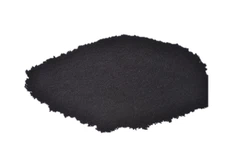
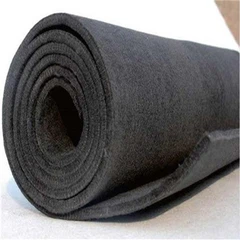
What is Graphite Felt


Carbon felt and graphite felt is an ideal material for high temperature insulation in vacuum furnaces and inert gas furnaces. The needle-punched PAN based carbon and graphite felt is light in weight and has low thermal conductivity.


Benefits of Graphite Felt


High Thermal Conductivity: Graphite felt can withstand extremely high temperatures (up to 3000°C in inert atmospheres) while providing excellent thermal management properties, making it ideal for insulation in high-temperature environments.

Electrical Conductivity: Its porous structure allows for high electrical conductivity, making it useful as an electrode material in energy storage systems like batteries and fuel cells.


Corrosion Resistance: Graphite felt has strong resistance to most chemicals, making it durable in harsh chemical environments like those found in electrochemical applications.


Lightweight and Flexible: Despite its durability and strength, the material remains lightweight and flexible, which makes it easy to work with and install in various systems.


Porous Structure: The highly porous nature of graphite felt allows for fluid or gas flow, which is especially useful in applications where diffusion or catalysis is required, such as in fuel cells.


Why Choose us


Excellent team

Our team is experienced bringing wide knowledge to every order we received. We train our employee to ensure they posses the skills and qualifications to deliver outstanding results.


Quality Assurance

We are committed to producing and providing high-quality product. We take advanced production techniques and strict quality control measures to ensure our products have excellent performance, stable chemical composition, and reliable service life.


Experience and expertise

China Gotrays has a strong commitment to their customers. With over 15 years of experience, China Gotrays consistently seeks out innovative ways to ensure its vendors and customers achieve maximum profits.


Applications of Graphite Felt


Fuel cells
In proton exchange membrane fuel cells (pemfcs) and solid oxide fuel cells (sofcs), graphite felt is used as a gas diffusion layer or flow field material. Its porosity allows the efficient transport of gases (like hydrogen and oxygen), while its electrical conductivity facilitates current collection and transfer within the cell.


Batteries
In flow batteries, such as vanadium redox flow batteries (vrfb), graphite felt serves as the electrode material. Its large surface area and porous structure enhance electrochemical reactions, improving battery efficiency and longevity.
Graphite felt is also used in lithium-ion batteries as an electrode material to enhance conductivity and battery performance.


Thermal insulation
High-temperature furnaces and reactors use graphite felt as a thermal insulation material due to its ability to maintain stability and provide thermal protection even at extreme temperatures.
It is often used in vacuum furnaces and other thermal processing equipment, where it prevents heat loss and improves energy efficiency.


Chemical processes
Graphite felt is employed in chemical reactors and electrolytic processes due to its corrosion resistance and chemical stability. It can function as an electrode in electrochemical cells where it is exposed to aggressive environments.


Semiconductor manufacturing
The felt is used in the semiconductor industry for insulation and shielding during high-temperature processes, helping to maintain clean and stable environments critical to semiconductor production.


Graphite Felt Production Process

Graphite felt is darker in color, has good electrical conductivity, and can withstand temperatures up to 1300°c. It is often used in long-term high-temperature environments, such as single crystal ingot casting furnaces, for heat insulation. The following is a detailed introduction to the production process of graphite felt.

Insulation Lining Materials For High Temperature Furnaces(graphite Felt)
Graphitefelt
PAN-based Graphite Soft Felt For Semiconductor And Photovoltaic
Graphitefelt

Impregnation and drying process of carbon felt: After the raw material viscose fiber cloth passes the screening and inspection, it enters the impregnation tank and is immersed in an aqueous solution of 1% diamine phosphate. After 1 hour, take it out and enter the continuous extrusion equipment for extrusion, and the extruded diammonium hydrogen phosphate solution is returned to the dipping tank. Dried up on a drying rack by natural light or electric dryer.


Carbon felt carbonization treatment process: The dried viscose fiber cloth enters the carbonization furnace and heats up to 300°c. The temperature rises first slowly and then quickly. There are nitrogen pipes distributed at the bottom of the furnace, and nitrogen gas is introduced into the furnace to protect the product carbonization gas. Carbonization is the process of removing the volatile non-carbon components in the fiber, increasing the carbon content and purity of the product, and forming carbonized fibers with a graphite-like microcrystalline structure.


Carbon felt activation treatment process: After carbonization, the viscose fiber cloth is heated to about 1400°c (furnace temperature) for activation, and the activated graphite felt is the crude product. At the same time, the steam is passed through, and the fiber felt cloth is drilled with a high-temperature-resistant pipe, so that the specific surface area is increased, and the finished graphite felt is obtained. The so-called activation process is to add a catalyst (such as nitrogen) to increase the number of activated molecules in the entire reaction, so that the properties of carbon molecules and atoms become more active and have greater energy.


Slitting and rolling: After the through-hole graphite felt is naturally cooled, use a slitting machine, cutting machine, and rolling machine to cut into corresponding sizes according to sales needs, and after cutting, roll it and temporarily store it for sale.


Carbon felt is made of natural cellulose as raw material, pulp, spinning, etc., and it feels very soft. After impregnation, the flame retardant performance of the fiber can be improved, and chemical bonds or chelates can be formed between the phosphide and the cellulose molecules, so that intramolecular cyclization and intermolecular crosslinking can prevent the escape of molecular fragments, thereby improving the quality of the product. The yield.


Rayon-based Graphite Soft Felt For Semiconductor And Photovoltaic


How Thick Is Graphite Felt?

Graphite Rigid Felts, up to 2.000 °C
Rigid graphite felt comes from a natural mineral derivative of carbon (C). It has a hexagonally shaped structure and is soft and flexible. It is usually of black or grayish color. Carbon and graphite products are appreciated for their chemical and physical properties: chemically inert, thermal resistance, low thermal and electrical conductivity, low thermal expansion coefficient, low friction coefficient, low coefficient of absorption of X-rays and electrons. Moreover, these products can be used in different fields: they can be found in pencils and alkaline batteries but also in the metallurgy, automobile and high technologies industries.

Rigid graphite felt is available with a thickness of 40 mm (max. size 1,524 x 1,219 mm). This product is made of graphite fibres and a carbon binder. It is suitable for temperatures up to 2,200 °C. Specific widths and shapes can be cut. Other felts' options are also available.


Differences between Carbon Felt and Graphite Felt
 
 
Temperature Resistance

The carbonization temperature of carbon fiber is around 1000 degrees Celsius, and after being made into carbon fiber felt, the carbon content is about 90%, with a usage temperature of around 1000 degrees Celsius. When carbon fiber felt is heated above 2000 degrees Celsius in an oxygen-free environment, it becomes graphite fiber. After being made into graphite fiber felt, the carbon content can exceed 99%, and the usage temperature can reach 2000 degrees Celsius. If carbon fiber felt is used in insulation environments above 2000 degrees Celsius, further reactions will occur.

 
Composition and Structure

Carbon felt is primarily made from carbon fiber and is a black fiber felt with good thermal conductivity and electrical properties. The main material of carbon felt is carbon fiber or bonded carbon fiber felt, where carbon fiber gradually crystallizes and becomes graphitized at high temperatures. Carbon fiber and graphitized carbon fiber are bonded by resin adhesives.
Graphite felt, on the other hand, is a porous material made by mixing natural graphite or artificial graphite micro powder with kerosene and then adding resin as a binder. This mixture is then subjected to high pressure, dried, and baked. Its structure is relatively loose, and soft, and has good lubricity and chemical stability.
Graphite felt has a higher carbon content than carbon felt, reaching over 99%.

 
Manufacturing Process

Both carbon felt and graphite felt are made from precursor fibers through processes such as weaving, needling, low-temperature carbonization, and high-temperature carbonization. Their initial processes are similar, with the main difference being that graphite felt undergoes further high-temperature carbonization. In the manufacturing process of graphite felt, carbon fibers are first cut into short fibers, mixed with a binder, and then formed, cured, carbonized, and graphitized to produce graphite felt.

Carbon felt is mainly prepared through steps such as vapor deposition, carbonization, and high-temperature heat treatment, where the carbonization process generally involves chemical reactions like vapor cracking. For graphite felt, its preparation involves the exfoliation and compaction of graphene. Specifically, large-scale production of graphite felt can be achieved through mechanical exfoliation, chemical exfoliation, and physical exfoliation methods.

 
Applications

Carbon felt is mainly used for insulation, protection, and conductivity in high-temperature environments, such as in aerospace manufacturing, nuclear engineering, solar panels, and thermal conductive plates. Graphite felts main use is as an insulation material in single-crystal silicon smelting furnaces. In the chemical industry, it can be used as a filtration material for high-purity corrosive chemical reagents. Under non-oxidizing atmospheres, the usage temperature of graphite felt can reach around 3000 degrees Celsius.

 
Carbon graphite felt application

Vacuum Furnaces: The heating elements used in vacuum furnaces require good thermal conductivity and electrical properties. Both carbon felt and graphite felt can be used as heating elements. Graphite felt, due to its lower strength, usually needs support materials for fixation.
Chemical Industry: Graphite felt has better chemical stability and lubricity, making it more suitable for use in reaction vessels requiring stirring.
Aerospace: In the aerospace field, heating elements need good radiation resistance and high-temperature stability, making carbon felt more suitable for such applications.

 
Physical and Chemical Properties

Physical Properties
Density: The density of carbon felt is generally higher than that of graphite felt, typically ranging from 1.7 to 2.0 g/cm³, while the density of graphite felt ranges from 1.5 to 1.8 g/cm³.
Thermal Conductivity: Both carbon felt and graphite felt have good thermal conductivity, but the thermal conductivity of graphite felt is slightly higher than that of carbon felt.
Electrical Properties: Both carbon felt and graphite felt exhibit excellent electrical properties, especially at high frequencies and high temperatures.
Strength: Carbon felt has higher strength than graphite felt, but graphite felt is more flexible.
Chemical Properties
Stability: Graphite felt has better chemical stability, maintaining stability in high-temperature and corrosive environments, whereas carbon felt is more susceptible to oxidation and corrosion.
Radiation Resistance: Carbon felt has good radiation resistance, making it suitable for nuclear industry applications, whereas graphite felt has relatively poor radiation resistance.


Company Introduction


Founded in 2008,China Gotrays is a family run business that prides itself in bringing quality products and service in graphite and refractory field. A leader in providing product and technique solution to many different industries. China Gotrays has a strong commitment to their customers. With over 15 years of experience, China Gotrays consistently seeks out innovative ways to ensure its vendors and customers achieve maximum profits.


The founder,Mr Tang,open the first factory in Zibo and produce graphite molds and synthetic graphite powder. For Mr tang once worked for a state-owned graphite company, he has much experience in graphite application. Gotrays grow quickly in business.


2014
For environment protection requirement, Gotrays open the natural graphite powder factory in Qingdao city and move the synthetic graphite powder production to Anshan City where they have advantage of raw material resource.


2015
Gotrays build self-owned graphite block model and invest graphite block factory ito ensure the competitive price of the whole supply chain.


2017
Gotrays open the refractory business in refractory ceramic and brick as well as silicon carbide product, and found the new business unit- Refractory ceramic business unit (RCB).


2019
Gotrays found the chance in new energy battery, and start the business of refractory products, including saggers and plates.And this business departs from RCB and become a new BU, specially for new energy battery industry.


Today, Gotrays retains the same values Old Mr Tang passed on to his son: hard work, honesty, and perseverance. While gotrays has grown year by year, the key principal of the company's value remains same, great relationships, whether by blood or by proxy, are the keys to any successful business.


Asked Questions


Q: What is the difference between carbon felt and graphite felt?

A: Graphite felt is a rayon based material that is an ideal choice for vacuum furnaces or process temperatures above 2000° C. Carbon felt is a lower-cost alternative to Graphite felt for applications where chemical purity is not as critical.

Q: What is the structure of graphite felt?

A: Graphite Felt is a type of graphite material that is made from fibers of carbon or graphite tightly woven together to form a flexible and porous felt-like structure.

Q: How thick is graphite felt?

A: Rigid graphite felt is available with a thickness of 40 mm (max. size 1,524 x 1,219 mm). This product is made of graphite fibres and a carbon binder. It is suitable for temperatures up to 2,200 °C.

Q: What is the specific heat of graphite felt?

A: Heat capacity (Specific heat): The molar heat capacity of graphite is reported as 8.033-8.635 J/mol.

Q: What is the conductivity of graphite felt?

A: In both situations the results show a significant increasing in the initial electrical conductivity (s = 2.85 Ohm-1m-1) with mechanical compression. In the confined graphite felt case, this increasing is approximately 5.5 times higher than the unconfined graphite felt case for almost the same compressive force.

Q: How is graphite felt made?

A: The base material for the production of carbon and graphite felt is felts made of needled cellulose fibers. These are processed into carbon soft felts by thermal treatment at 800-1,000°C.

Q: Why does graphite felt feel slippery to the touch?

A: Graphite felt is soft and slippery because it has a layered structure, because of which they could slide over each other. The bond is broken easily because of the weak force of attraction and hence they slide over each other. This results in the slipperiness of graphite.

Q: What are the safety considerations for graphite felt?

A: While normal workplace exposure to graphite felt doesn't appear to cause significant health effects, it may cause minor skin, eye, or lung irritation. Good hygienic practices can help minimize these effects.

Q: What is graphite felt?

A: Graphite felts are used as electrode backings in a variety of battery designs including vanadium redox flow batteries (VRB). The high conductivity, high purity, and chemical resistance of felts make them ideal for the demanding design criteria of flow battery developers. They are: Furnace insulation & parts.

Q: Choosing Carbon Felt or Graphite Felt?

A: When purchasing, it is important to consider the specific application’s requirements, including the operating environment’s temperature, chemical properties, and physical form needs (such as whether folding or cutting is required). Additionally, cost-effectiveness should be taken into account, as although graphite is felt to have superior performance, it may be more expensive. If the application does not require particularly high-temperature resistance or other extreme performance, choosing carbon felt may be more economical.

As one of the leading graphite felt manufacturers and suppliers in China, we warmly welcome you to wholesale high quality graphite felt at competitive price from our factory. Contact us for more details.

Kiln Furniture, Ceramic Crucible Boat, Cordierite Mullite Sagger

Send Inquiry