Company Profile


As a professional graphite and carbon company, we have excellent quality control and products covering various applications such as semi-conductor,high-temperature furnaces, non-ferrous, pigment, magnetic powder, rubber, brake pads, and more. We have a dedicated research and development team committed to technological innovation and developing new products to meet customer demands. We have flexible production capabilities to provide customized refractory material solutions according to customer needs. With these competitive advantages, we strive to become your trusted and reliable supplier of refractory materials.


Why Choose Us

Factory

The founder, Mr Tang, opened the first factory in Zibo and produced graphite molds and synthetic graphite powder. Mr tang once worked for a state-owned graphite company, he has much experience in graphite application. Gotrays grow quickly in business.

Quality Control

Our team is experienced bringing wide knowledge to every order we receive. We train our employees to ensure they possess the skills and qualifications to deliver outstanding results.


High Quality

We are committed to producing and providing high-quality products. We take advanced production techniques and strict quality control measures to ensure our products have excellent performance, stable chemical composition, and reliable service life.


Professional Team

We value environmental protection and sustainable development, focusing on developing and producing eco-friendly materials. We actively adopt energy-saving and emission-reducing production processes and promote recycling and resource utilization to minimize our impact on the environment.


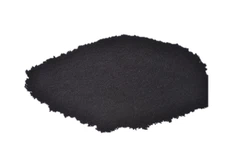
graphite powder


What is Graphite Powder?

Graphite powder is simply a powder form of graphite that retains all of the material’s inherent primary and secondary properties. The graphitic powder is a highly effective lubricant that has multiple beneficial properties.
The graphite acts as a naturally derived fire retardant barrier and exceeds all U.S. standards for flammability.


Benefits of Graphite Powder

Reduced Friction:
Graphite powder acts as a microscopic ball bearing, reducing friction between moving parts and ensuring smooth operation.


Prevents Wear and Tear:
By minimizing friction, graphite powder helps prevent premature wear and tear on your locks, extending their lifespan.

Resists Corrosion

Graphite powder has natural anti-corrosion properties, protecting your locks from rust and damage.

All-Weather Performance

Unlike oil-based lubricants, graphite powder performs consistently in extreme temperatures, making it ideal for outdoor locks.

Easy to Apply

Simply puff a small amount of graphite powder into the keyhole or onto the key and work it into the lock mechanism.


Types of Graphite Powder

At Gotrays, we work with several types of graphite powders, including natural crystalline flake, natural vein, amorphous and synthetic graphite, various forms of coal and organically-derived precursors, calcined petroleum coke, as well as synthetically produced precursors-based on various forms of carbon black, fibers and nanotubes. The variety of graphite that we work with allows us to also have the privilege of working with technologies from around the world to perfect our products.


One specialty product, spherical graphite, is surface coated with a nanoscale layer of amorphous carbon, doped with silicon, and classified to a very narrow particle size distribution to be perfected. Such graphite can be applied in the most advanced lithium-ion batteries. Another graphite is intercalated, thermally exfoliated, delaminated, and de-volatilized for use in lithium primary and alkaline batteries. It can also also be an additive in plastics, used in composite brakes, and be made into industrial and plant coatings that pose the shielding capability.

Low Sulfur Expandable Graphite Powder


Graphite Powder Finds Various Applications Across Different Industries
 
01/

Lubrication: Due to its low friction properties, graphite powder is used as a dry lubricant in various mechanical applications, especially in situations where oil or grease-based lubricants are not ideal. It's used in locks, hinges, and even in manufacturing processes to reduce friction between moving parts.

02/

Reinforcement in Materials: In the manufacturing sector, graphite powder is often added to materials like plastics, rubber, and metals to enhance their properties. For instance, it can improve the conductivity of plastic and rubber products or reinforce materials used in making batteries.

03/

Heat and Chemical Resistance: Graphite powder is used in high-temperature applications such as in the making of crucibles, molds, and foundry facings due to its resistance to heat and chemical reactions.

04/

Art and Industry: Artists use graphite powder in drawing, particularly for creating shading effects. In industry, it's used in pencils and as a component in paints and coatings.

05/

Electronics: Graphite powder is utilized in the production of electrodes and batteries due to its conductivity.

06/

Thermal Management: In electronics and other industries, graphite powder is used in thermal management applications, like in thermal pastes or pads to conduct heat away from sensitive components.


How to Choose High-Quality Graphite Powder


Color
The graphite powder with good quality is uniform and fine, black and bright, black gray (metallic luster and opaque fine-scale solid); Soft and greasy. The poor-quality powder does not shine, particles look rough.


Feel
You can pinch it with your hand. The one with good smoothness is high-quality graphite powder, while the one with poor smoothness is poor.


Calcination
Natural flake graphite powder is calcined at 1200 ℃ to see the color change. The lighter the color, the better the product.


Particle size
There are many kinds of graphite powder particle sizes: for example, 20 mesh, 40 mesh, 80 mesh, 100 mesh, 200 mesh, 320 mesh, 500 mesh, 800 mesh, 1200 mesh, 2000 mesh, 3000 mesh, 5000 mesh, 8000 mesh, 12500 mesh, the smallest can be 15000 mesh.


Carbon content
The content of carbon is 99%, 95%, 90%, 85%, 80%, and Hanhui graphite is mainly high-purity graphite with a carbon content of more than 99%. The higher the carbon content of graphite powder, the better the quality.


Price
The price of high-quality natural flake graphite powder is a little higher than other types because of its wide application, high carbon content, and superior performance.


graphite powder in Metallurgy


Use of Graphite Powder In Metallurgy

Graphite powder is widely used in the metallurgy industry due to its excellent properties. Firstly, it can serve as a dry lubricant, reducing friction in high-temperature processes and assisting in the removal of castings. Secondly, graphite powder has outstanding high-temperature resistance, making it suitable for refractory materials such as furnace linings and kilns, thereby improving thermal efficiency.

Additionally, graphite powder can act as a carbon source in steel production, helping to control the microstructure of steel and enhancing its hardness and strength. In electrode manufacturing, graphite powder is widely used due to its good conductivity and durability. Finally, graphite powder can also be used to create protective coatings and thermal barrier coatings, improving metal's corrosion resistance and wear resistance, and promoting the densification of powder metallurgy components.


The Material Characteristics Of Graphite Powder


Graphite powder is a kind of very sensitive material to the chemical reaction, in different environments, and its resistance to change, that is, the resistance value will change, but won't change a thing, the graphite powder is a kind of very good non-metallic conductive material, as long as the object of the insulation, to ensure that the graphite powder is uninterrupted, like a thin line will be charged, however, that no accurate values. Due to the different thicknesses of graphite powder, the resistance of graphite powder used in different materials and environments is also different.

Graphite powder is soft, dark gray, and greasy, polluting the paper. Hardness is 1≤2, with the increase of impurity content, hardness can be increased to 3≤5 along the vertical direction. The specific gravity was 1.9-2.3. Under oxygen isolation, its melting point is above 3000℃, and it is one of the most high-temperature resistant minerals. At room temperature, the chemical properties of graphite powder are relatively stable and insoluble in water, dilute acid, dilute alkali and organic solvents. The material has high-temperature conductivity and can be used as refractory, conductive material, wear-resisting lubrication material, etc.


Production Process of Graphite Powder

Graphite mineral crushing

Large pieces of graphite minerals are crushed by a crusher for primary crushing so that the graphite ore reaches the required feed fineness of the graphite stone grinding mill.

Graphite grinding

Graphite stone is broken into small particles with fineness between 15-50mm by crusher and transported to the silo by elevator. Then it is transported to the ball mill or vertical coal mill through the electromagnetic feeder for grinding. Then it is transported to the graphite ore ball mill or vertical coal mill through the electromagnetic vibrating feeder for grinding. 

graphite ore
graphite production

Classification of graphite powder

The graphite powder ground by the graphite powder grinding mill is sent to the powder classifier for classification, and the unqualified graphite powder particles are sent back to the graphite ore ball mill for regrinding.

Collect powder

The graphite powder conforming to the fineness is discharged from the graphite powder mill and enters the dust collector for separation and collection.


Graphite Powder–Secret Weapon for Graphite Drawing


Smooth Applications of Graphite Without Pencil Strokes
Many times with graphite drawings, we want to create smooth transitions of value or simply areas of smooth applications where you don’t see the pencil lines.

Most of us simply adjust the amount of pressure we place on the pencil and then use a blending tool such as a blending stump to soften the applications. And while this technique works okay, it’s often inconsistent and it’s also time-consuming. Well, there is a better way – a secret weapon, if you will, to get these same effects.


Making Your Powdered Graphite
Powdered graphite may be difficult to find in a local art store but we can make our own. Just use a sandpaper pad and rub some soft graphite over the surface. Then using a brush, we can lift the powdered graphite that we’ve created and apply it to the surface.


Applying Powdered Graphite
You’ll notice that your initial applications of powdered graphite are quite soft and light, but we can revisit the powdered graphite and put an additional layer, gradually darkening the value.


Powdered Graphite Usage
All of the remaining excess powder that remains on the surface can be blown away gently or brushed away with a drafting brush. Powdered graphite can also be applied with a cotton swab or tissue paper.
Just like with any drawing medium, the surface of the paper plays a role in the application and look of the powdered graphite. The texture of the paper will affect the appearance of the powdered graphite.
One method of using powdered graphite is somewhat like painting. In this particular case, I’ve sketched out the contour lines of the subject.


Importance of Graphite Powder in Lubrication


Because of its excellent lubricantity, graphite powder is widely used as a lubricant in various applications, such as machinery, automotive, aerospace, and industrial equipment. Its function in lubrication can be explained as follows: 


Low friction: Graphite powder reduces friction between two surfaces by forming a thin film on the surface, which acts as a cushion and reduces the amount of direct contact between the surfaces.


High-temperature resistance: Graphite powder has high thermal stability and can withstand high temperatures without losing its lubricating properties. This makes it ideal for applications where high temperatures are present, such as in engine parts.


Corrosion resistance: Graphite powder is chemically inert and does not react with most materials, making it an effective lubricant for harsh environments that are prone to corrosion or chemical reactions.


Wear resistance: Graphite powder’s ability to reduce friction and protect the surface from damage can increase the lifespan of the machinery.


Easy application: Graphite powder can be easily applied to lubricating surfaces as it is in dry form, making it convenient for use in various applications.


Our Factory


The founder, Mr Tang, opened the first factory in Zibo and produced graphite molds and synthetic graphite powder. Mr tang once worked for a state-owned graphite company, and he has much experience in graphite application. Gotrays grow quickly in business.


p20240308134151c4ab4.jpg (750×562)
quality check
productcate-1-1
productcate-1-1


Honor&Qualification


p20240308133701b5238.jpg (750×1061)
p2024030813370472822.jpg (750×1061)
p20240308133708d8fc7.jpg (750×1061)
p202403081337127ecae.jpg (750×1061)


FAQ


Q: Is powdered graphite safe?

A: A harmful concentration of airborne particles can be reached quickly when dispersed, especially if powdered. Repeated or prolonged inhalation of dusts may cause effects on the lungs. This may result in graphite pneumoconiosis.

Q: Is graphite powder the same as charcoal?

A: Chemical Structure. Charcoal has a considerably different chemical structure than Graphite, despite both being made from carbon. The make-up of charcoal is much more non-uniform and irregular. The structure folds in on itself, which gives charcoal its soft, crumbly texture.

Q: Can graphite powder get wet?

A: Graphite will also work when it gets wet. Sometimes graphite is mixed with water, or other liquids, to allow the graphite to flow into all parts of a mechanism. The water evaporates and the graphite remains to keep the parts well lubricated.

Q: How long does graphite powder last?

A: The product should be kept in securely closed containers during transport and storage. Adequate long-term storage conditions will result in a shelf life of 2 years from the date of manufacture. Storage should be in a warm dry place out and containers should be firmly closed.

Q: What is a substitute for graphite powder?

A: Graphite powder is an excellent dry lubricant but has been shown to corrode aluminum when moisture may be present. At this time, graphite can be replaced by molybdenum disulfide MoS2 powder. It is used as a mold-release lubricant in the production of catalysts in the fertilizer industry.

Q: Why use graphite powder?

A: Lubrication: Due to its low friction properties, graphite powder is used as a dry lubricant in various mechanical applications, especially in situations where oil or grease-based lubricants are not ideal. It's used in locks, hinges, and even in manufacturing processes to reduce friction between moving parts.

Q: What is graphite powder used?

A: Graphite powder is used in some machines to reduce friction because graphite powder consists of fine particles and these fine particles stick to surfaces and make them smooth so friction among surfaces is reduced.

Q: Is graphite powder hazardous?

A: General information No specific health hazards known. The severity of the symptoms described will vary dependent on the concentration and the length of exposure. Ecotoxicity Not regarded as dangerous for the environment. However, large or frequent spills may have hazardous effects on the environment.

Q: Is graphite powder explosive?

A: GRAPHITE is non-flammable in bulk form, but combustible. A reducing agent. Mixtures of graphite dust and air are explosive when ignited. Reacts violently with very strong oxidizing agents such as fluorine, chlorine dioxide, and potassium peroxide.

Q: Is graphite powder good for door locks?

A: To lubricate the lock Safestyle recommends using graphite powder, the fine particles mean less residue than oils or sprays which can also be sensitive to hot or cold conditions. Put a little amount of graphite powder inside the door lock to ease any friction inside, making sure not to put in too much.

Q: Can you mix graphite powder with water?

A: Now, regular old graphite can also be “spread” with water a bit, but the water-soluble graphite will dissolve and become ink-like when it's wet. It can be moved and spread over a surface, much like watercolor paint. You can control how thick (dark) and thin (light) the wash becomes by how much water you add.

Q: What is black graphite powder used for?

A: It is used in lubricants, paint, glass manufacturing, and conductive coatings. “Lead” pencils, electrodes, brake linings, batteries, powder metallurgy, and fertilizers also are manufactured using graphite.

Q: Does graphite powder wash off?

A: Liquid Detergent. If a soft eraser fails to remove the stain, apply a few drops of liquid detergent to the affected area and rub gently with a soft, damp cloth. If possible, launder the stained fabric immediately after applying the detergent. Otherwise, wipe excess soap away with a damp cloth.

Q: Is graphite powder the same as charcoal?

A: Chemical Structure. Charcoal has a considerably different chemical structure than Graphite, despite both being made from carbon. The make-up of charcoal is much more non-uniform and irregular. The structure folds in on itself, which gives charcoal its soft, crumbly texture.

As one of the leading graphite powder manufacturers and suppliers in China, we warmly welcome you to wholesale high quality graphite powder at competitive price from our factory. Contact us for more details.

Fused Quartz Plate, Fused Alumina Plate, Cordierite Kiln Shelves

Send Inquiry