


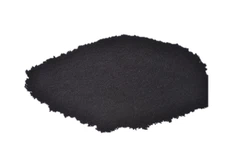

Carbon nanotubes are cylindrical molecules composed of rolled up single-layer or multi-layer carbon atomic sheets (graphene), and are a one-dimensional quantum material with a special structure. Therefore, carbon nanotubes themselves possess multiple major material characteristics and superior performance of graphene, which determines their significant development potential in the fields of physics, chemistry, and materials science.

With the booming development of lithium-ion battery new energy vehicles in China, carbon nanotubes have opened up their most important industrial large-scale application - ultra-high performance conductive agents for lithium-ion batteries. This is a material that solves the key performance issues of lithium-ion batteries, such as energy efficiency ratio, battery life, fast charging and discharging, and cycle life. Due to its unique material characteristics, it has exceeded the application performance limit of existing materials and is irreplaceable. The scaling up from hundreds to thousands of tons has solved the key issues of new material cognition, process technology practice, equipment matching, and key performance standard construction for the development of the entire industry. Carbon nanotubes are leading carbon based materials out of the most risky immaturity period in their lifecycle, entering a growth period, and gradually demonstrating market potential worth billions.
Carbon nanotubes, as one of the twenty most promising new materials and the only leader in science fiction carbon based materials, possess excellent electrical, mechanical, and thermal properties as nanomaterials. They have gradually opened up broad application prospects in fields such as information technology, life sciences, new composite materials, aerospace, and energy. According to research and estimation by the Lithium Battery Research Institute (GGII), the global demand for carbon nanotube conductive paste (which contains 3-5% carbon nanotubes and the rest is solvent NMP) will maintain a compound annual growth rate of 40.8% in the next five years. The demand will reach 120000 tons in 2022 and 190600 tons in 2023. The domestic market for carbon nanotube conductive agents is expected to reach 4.5 billion yuan by 2025, with the rapid growth of the power battery industry.

With the expansion of new technologies such as high nickel positive electrodes, silicon-based negative electrodes, and solid-state batteries in lithium batteries, the application of carbon nanotubes will experience explosive growth, and it will become an annual market worth billions in the field of lithium batteries alone. The application of conductive agents in lithium batteries is only the tip of the iceberg in the industrialization of carbon nanotubes, and is the first step in market recognition of carbon nanotubes. Carbon nanotubes will have a broader market in touch screens, transistors, biomedicine, solar photovoltaic cells, tires, fuel cells, drug delivery, hydrogen storage, polymer materials, capacitors, composite materials, etc., and will continue to break through multiple billion dollar markets, creating an industry with a billion dollar market.
However, currently there are limited manufacturers in China that can scale up the preparation of multi walled carbon nanotubes, and the overall production is low, which limits the application of carbon nanotubes on a large scale. Among them, Gaoteli Carbon has always adhered to scientific research investment and reliable industrial scaling up, gradually promoting the application practice of carbon nanotubes in various application fields. Currently, it has become the largest production base of multi walled carbon nanotubes domestically and internationally, and is also the new material supplier with the most complete variety of carbon nanotubes and the most widely leading application fields.