


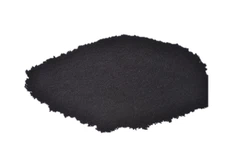
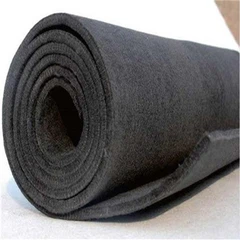
Graphite powder is a common industrial raw material that has wide applications in many different fields. Now let's learn together where graphite powder can be applied.
Firstly, graphite powder can be used as a coating additive. Due to its excellent properties such as fire resistance, conductivity, and thermal conductivity, adding graphite powder to coatings can significantly improve their fire resistance and conductivity. In addition, graphite powder can also improve the lubricity of coatings, making them easier to apply and treat.
Secondly, graphite powder can also be used as a preservative. Due to its excellent chemical stability and high temperature resistance, graphite can be converted into graphite powder and used to manufacture anti-corrosion coatings, paints, and other products to protect metal surfaces from corrosion and oxidation.
In addition, graphite powder can also be used as a ceramic glaze agent, plastic filler, rubber reinforcement agent, etc. In the ceramic industry, graphite powder can improve the brightness and hardness of glaze, making porcelain smoother and whiter; In the plastic and rubber industry, graphite powder can enhance the toughness, strength, and wear resistance of materials.

In addition, graphite powder has a wide range of applications in fields such as electronics, aviation, and automobiles. For example, in battery manufacturing, graphite powder is used as a negative electrode material to improve the performance and lifespan of batteries; In aviation and automotive manufacturing, graphite powder can be used to manufacture composite materials, fire-resistant materials, and insulation materials.
The process of processing graphite into powder is also divided into several steps. Firstly, the preparation of raw materials. The preparation of graphite powder usually requires the use of graphite blocks or natural graphite ore as raw materials, which require pre-treatment processes such as crushing and screening for subsequent processing. In this stage, it is necessary to ensure that the raw materials avoid doping impurities as much as possible to obtain higher quality graphite powder.

Next is the preliminary processing of graphite powder. Usually, mechanical crushing, grinding and other methods are used to break the raw materials into a certain size to obtain the initial form of graphite powder. Among them, mechanical crushing refers to crushing raw materials into powder through mechanical equipment such as squeezing and shearing them; Grinding is the use of a grinding machine to finely process raw materials to obtain finer powder.
Then there is the precision processing of graphite powder. After the initial preparation of graphite powder, it is necessary to carry out secondary processing through more refined processing methods to achieve higher purity and better performance. Common precision processing methods include gelling agent method, wet chemical method, oxidation method, etc.
Finally, the shaping and packaging of graphite powder. After the above steps, the graphite powder has reached the expected fineness and quality requirements. Next, it needs to be dried, screened, and other treatments to remove excess moisture and impurities, and then packaged and stored.