


Can a clay graphite crucible be used in a plasma melting system?
Dec 11, 2025
Leave a message
Hey there! As a clay graphite crucible supplier, I often get asked some pretty interesting questions. One that's been popping up a lot lately is, "Can a clay graphite crucible be used in a plasma melting system?" Let's dig into this topic and find out if it's a match made in heaven or a total mismatch.
First off, let's understand what we're dealing with. A clay graphite crucible is a commonly used tool in the metal - melting and foundry industries. It's made by combining clay, which gives it some structural integrity, and graphite, which provides excellent thermal conductivity. This combination results in a crucible that can withstand high temperatures and has good resistance to thermal shock.
On the other hand, a plasma melting system is a high - tech setup that uses a plasma arc to generate extremely high temperatures for melting metals. Plasma arcs can reach temperatures upwards of 10,000 degrees Celsius, which is way hotter than what most traditional melting methods can achieve.
Advantages of Using a Clay Graphite Crucible in a Plasma Melting System
There are a few reasons why you might think a clay graphite crucible could work in a plasma melting system.
1. Good Thermal Conductivity
Graphite is a fantastic conductor of heat. In a plasma melting system where heat needs to be transferred quickly and evenly to the metal being melted, the high thermal conductivity of a clay graphite crucible can be a real advantage. It helps to reduce the melting time and ensures that the metal is heated uniformly throughout the crucible.
2. Resistance to Thermal Shock
Plasma melting involves rapid heating and cooling cycles. A good clay graphite crucible can handle these thermal shocks quite well. Since graphite has a relatively high coefficient of thermal expansion that's balanced by the clay, the crucible is less likely to crack or break during these cycles. This durability can save you money in the long run since you won't have to replace the crucible as often.
3. Chemical Inertness
In many cases, the metals being melted in a plasma system may be reactive. Clay graphite crucibles are chemically inert to a wide range of metals, which means they won't react with the molten metal and contaminate it. This is crucial for applications where the purity of the final product is important.
Limitations and Challenges
However, it's not all rainbows and sunshine. There are some limitations to using a clay graphite crucible in a plasma melting system.
1. Ultra - High Temperatures
As mentioned earlier, plasma arcs can reach extremely high temperatures. While clay graphite crucibles can withstand high heat, the upper limit might not be sufficient for some plasma melting applications. At very high temperatures, the graphite in the crucible can start to oxidize, which weakens the structure of the crucible over time. Oxidation also releases carbon dioxide, which could potentially contaminate the molten metal.
2. Erosion and Corrosion
The intense energy of the plasma arc can cause erosion of the crucible's surface. The high - velocity particles in the plasma can wear away the clay and graphite, reducing the lifespan of the crucible. Additionally, some reactive metals or alloys being melted in the plasma system may corrode the crucible, especially if the temperature and chemical environment are not carefully controlled.
Alternatives to Clay Graphite Crucibles
If the limitations of clay graphite crucibles are a deal - breaker for your plasma melting system, there are some alternatives you can consider.
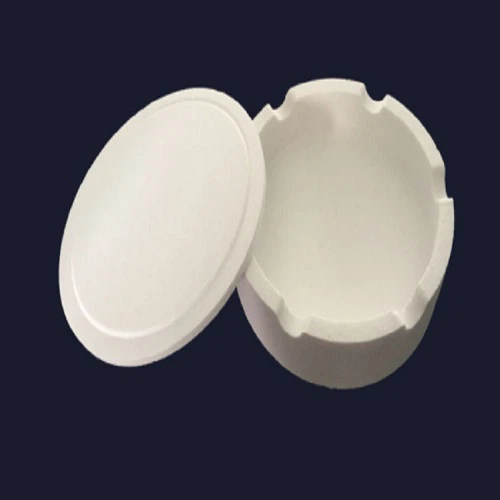
1. Aluminum Ceramic Crucible With Lid Cap
These crucibles are made from aluminum ceramic materials and are known for their high - temperature resistance. They can often withstand even higher temperatures than clay graphite crucibles and are less prone to oxidation. They also have good chemical resistance, making them suitable for a variety of metal melting applications.
2. Cordierite Mullite Crucibles
Cordierite mullite crucibles offer a combination of good thermal shock resistance and high - temperature performance. They are often used in foundries and other metal - processing applications. Their thermal expansion properties are well - suited for the rapid heating and cooling cycles typical of plasma melting systems.
3. Corundum Zirconia Crucibles
These crucibles are made from a combination of corundum (aluminum oxide) and zirconia. They have excellent chemical and thermal stability, making them ideal for high - temperature and high - purity melting applications. They can resist erosion and corrosion better than some other types of crucibles.
Making the Decision
So, can a clay graphite crucible be used in a plasma melting system? The answer is: it depends. If your plasma melting process operates at relatively moderate temperatures and the metals you're melting are not overly reactive, a clay graphite crucible could work just fine. You'll enjoy the benefits of its good thermal conductivity, resistance to thermal shock, and chemical inertness.
However, if you're dealing with ultra - high temperatures or highly reactive metals, you might want to consider one of the alternative crucibles mentioned above. It's important to evaluate your specific requirements, such as the temperature range, the type of metal being melted, and the desired purity of the final product.
As a supplier of clay graphite crucibles, I'm here to help you make the right choice. Whether you decide that a clay graphite crucible is the best fit for your plasma melting system or you're interested in exploring other options, I can provide you with the information and products you need. If you have any questions or want to discuss your specific needs, don't hesitate to reach out. We can have a chat about your requirements and figure out the best solution together.

References
- "Handbook of High - Temperature Materials" by John Wiley & Sons
- "Foundry Technology: Principles and Practice" by ASM International
- Industry research papers on plasma melting and crucible materials
Send Inquiry