


Can Alumina Kiln Furniture be used in a roller kiln?
May 14, 2025
Leave a message
As a supplier of Alumina Kiln Furniture, I often encounter inquiries from customers about the compatibility of our products with different types of kilns, especially roller kilns. Roller kilns are widely used in the ceramics, glass, and refractory industries due to their high efficiency, continuous operation, and precise temperature control. In this blog post, I will explore whether Alumina Kiln Furniture can be used in a roller kiln, considering various factors such as material properties, design requirements, and operational considerations.

Material Properties of Alumina Kiln Furniture
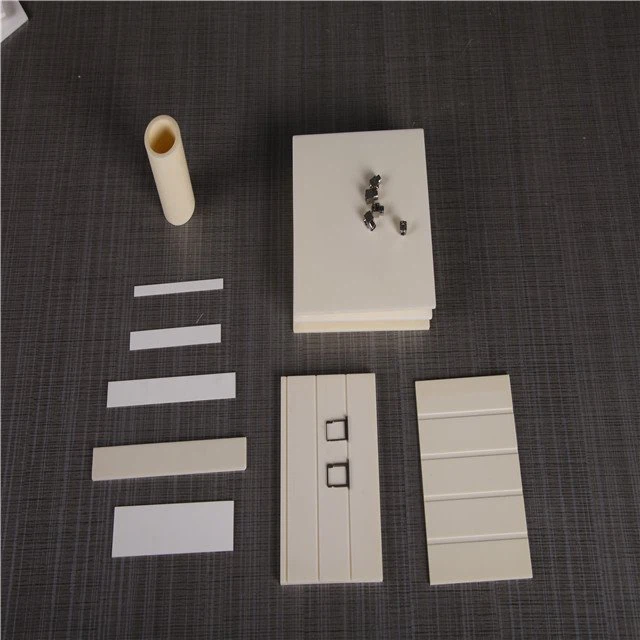
Alumina is a widely used material in kiln furniture due to its excellent thermal, mechanical, and chemical properties. It has a high melting point, typically around 2054°C, which makes it suitable for high-temperature applications. Alumina also has good thermal shock resistance, meaning it can withstand rapid temperature changes without cracking or breaking. This property is crucial in roller kilns, where products are often subjected to quick heating and cooling cycles.
In addition to its thermal properties, alumina has high mechanical strength and hardness. It can support heavy loads without deforming, making it ideal for use as kiln shelves, supports, and other structural components. Alumina is also chemically inert, which means it does not react with most materials at high temperatures. This makes it suitable for use in environments where it may come into contact with molten glass, ceramics, or other reactive substances.
Design Requirements for Roller Kilns
Roller kilns have specific design requirements that must be considered when selecting kiln furniture. One of the key considerations is the shape and size of the kiln furniture. Roller kilns typically have a narrow width and a long length, with products moving through the kiln on a series of rollers. Therefore, the kiln furniture must be designed to fit within the kiln's dimensions and to move smoothly on the rollers.
Another important design consideration is the weight of the kiln furniture. Roller kilns are designed to operate at high speeds, and heavy kiln furniture can cause excessive wear and tear on the rollers and other components. Therefore, it is important to use kiln furniture that is lightweight yet strong enough to support the products being fired.
Compatibility of Alumina Kiln Furniture with Roller Kilns
Based on its material properties and the design requirements of roller kilns, Alumina Kiln Furniture is generally compatible with roller kilns. Its high melting point, thermal shock resistance, and mechanical strength make it suitable for use in high-temperature, high-speed environments. However, there are some factors that must be considered to ensure optimal performance.
One factor to consider is the surface finish of the Alumina Kiln Furniture. Roller kilns rely on smooth, flat surfaces to ensure that products move smoothly through the kiln. Therefore, the Alumina Kiln Furniture must have a smooth surface finish to prevent products from sticking or getting damaged. Additionally, the surface finish can affect the heat transfer properties of the kiln furniture, which can impact the firing process.
Another factor to consider is the design of the Alumina Kiln Furniture. As mentioned earlier, roller kilns have specific design requirements, and the kiln furniture must be designed to fit within these requirements. For example, the kiln furniture must have a shape and size that allows it to move smoothly on the rollers and to fit within the kiln's dimensions. Additionally, the design of the kiln furniture can affect its strength and durability, which are important considerations in a high-speed, high-temperature environment.
Operational Considerations
In addition to material properties and design requirements, there are also some operational considerations to keep in mind when using Alumina Kiln Furniture in a roller kiln. One of the key considerations is the temperature profile of the kiln. Roller kilns typically have a specific temperature profile, with different zones of the kiln operating at different temperatures. It is important to ensure that the Alumina Kiln Furniture is capable of withstanding the temperature variations in the kiln and that it does not cause any thermal stress or damage to the products being fired.
Another operational consideration is the loading and unloading process. Roller kilns are designed for continuous operation, and products are typically loaded and unloaded from the kiln at high speeds. Therefore, it is important to ensure that the Alumina Kiln Furniture is easy to handle and that it can be loaded and unloaded quickly and safely. Additionally, the loading and unloading process can affect the wear and tear on the kiln furniture, so it is important to use kiln furniture that is durable and resistant to damage.
Other Types of Kiln Furniture for Roller Kilns
While Alumina Kiln Furniture is a popular choice for roller kilns, there are also other types of kiln furniture that can be used, depending on the specific requirements of the application. For example, Fused Quartz Plate and Fused Silica Plates are also commonly used in roller kilns due to their excellent thermal properties and high transparency. These materials are particularly suitable for applications where precise temperature control and visibility are required.
Conclusion
In conclusion, Alumina Kiln Furniture can be used in a roller kiln, provided that its material properties, design requirements, and operational considerations are carefully considered. Alumina's high melting point, thermal shock resistance, and mechanical strength make it a suitable material for use in high-temperature, high-speed environments. However, it is important to ensure that the Alumina Kiln Furniture is designed to fit within the kiln's dimensions and to move smoothly on the rollers. Additionally, the surface finish, temperature profile, and loading and unloading process must be carefully considered to ensure optimal performance.

If you are interested in learning more about our Alumina Kiln Furniture or other types of kiln furniture for roller kilns, please feel free to contact us for more information. Our team of experts is available to answer your questions and to help you select the right kiln furniture for your specific application.
References
- "Ceramics Kiln Technology" by H. E. Exell
- "Kiln Furniture: Design, Materials, and Applications" by John A. Schaefer
- "High-Temperature Materials and Their Applications" by R. A. Rapp
Send Inquiry