


New Refractory Material---Zirconia
Aug 22, 2021
Leave a message
What is zirconia?
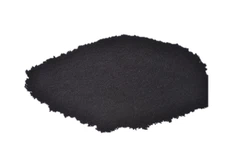
Zirconium oxide ceramics are white, yellow or sometimes can be gray when containing impurities, and generally contain HfO 2, which is not easily separated. Pure ZrO2 has three crystal states under normal pressure. The production of zirconia ceramics requires the preparation of high-purity, good dispersion properties, ultra-fine particles, narrow particle size distribution,
zirconia ultrafine powder preparation methods
zirconia purification mainly include chlorination and thermal decomposition, alkali metal oxidative decomposition method, lime melting method, plasma arc method, precipitation method, colloid method, hydrolysis method, spray pyrolysis etc.

The applications of zirconia

(1) Structural Ceramics
In terms of structural ceramics, zirconia ceramics are widely used in the field of structural ceramics because of their high toughness, high flexural strength and high wear resistance, excellent thermal insulation properties, and thermal expansion coefficient close to that of steel.
(2) Functional Ceramics
In terms of functional ceramics, its excellent high temperature resistance is used as an induction heating tube, refractory material, and heating element. Zirconia ceramics have sensitive electrical performance parameters and are mainly used in oxygen sensors, solid oxide fuel cells (SOFC) and high temperature heating bodies. ZrO2 has a high refractive index (N-21^22), and it can be made into a colorful translucent polycrystalline ZrO2 material by adding certain coloring elements (V2O5, MoO3, Fe2O3, etc.) to the ultrafine zirconia powder, like natural gemstones, sparkling with colorful light, can be made into a variety of decorations. In addition, zirconia is widely used in thermal barrier coatings, catalyst carriers, medical, health care, refractory materials, textiles, and the like.
The finished product of zirconia:

Mainly: Y-TZP grinding ball, dispersion and grinding media, nozzle, ball valve ball seat, zirconia mold, micro fan shaft, fiber pin, fiber sleeve, wire drawing die and cutting tool, wear-resistant tool, clothing button, cases and straps, bracelets and pendants, ball bearings, golf ball hitters and other room temperature wear-resistant components.
The Refractory materials by Zirconia
Zibo Gotrays applies industrial alumina and zircon concentrates as raw material, introduces zirconia into the mullite by reactive sintering. Introducing zirconia into mullite bricks, the phase transformation toughening of zirconia can improve the high temperature mechanical properties of mullite materials.
The addition of ZrO2 can accelerate densification of ZTM materials due to formation of low melting point materials and vacancy. When mass fraction of ZrO2 is 30% , the relative theoretical density is 8% , the strength is 378 Mpa, and the toughness is 43 MPa.
After many years of sintering experience, Zibo Gotrays has found out that when ceramics are first heated at 1450 °C to densify, and then heated to 1600 °C to react, ZrO2 is decomposed into zirconium and silicon at more than 1535 °C, and mullite is formed by the reaction of silicon and alumina. Also, there is a part of liquid phase in the decomposition of ZrO2, and the decomposition of ZrO2 can refine the particles and increase the specific surface area, thus promoting sintering.
Zirconia Kiln Furniture

Zircon mullite brick is made of mullite as aggregate and zircon as raw material by mixing, molding, drying and firing at high temperature in shuttle kiln.
Zirconium corundum brick is made of alumina powder, zircon sand and other materials by mixing, molding, drying and firing at high temperature in shuttle kiln.
The brick containing zirconium has compact crystal structure, high volume density, large bulk density, high mechanical strength at normal temperature and high temperature, good thermal shock stability, small reburning shrinkage and high temperature creep, and has extremely high chemical stability and resistance to alkaline medium erosion and so on.
Zirconium-containing brick is mainly used in melting tank of large glass furnace, picture tube furnace, partition wall brick of regenerator, chemical industry furnace and metallurgical industry furnace.
The size, physical and chemical index and service life of the products have reached or exceeded the level of similar products both at home and abroad.
Send Inquiry