


Can a Sic Crucible be used in a high - pressure environment?
Jun 10, 2025
Leave a message
Sic crucibles, known for their exceptional properties, have long been a staple in various industrial and laboratory applications. As a leading supplier of Sic crucibles, I often encounter inquiries about their suitability for high - pressure environments. In this blog, I will delve into the scientific aspects of using Sic crucibles under high pressure, considering their material properties, potential limitations, and practical applications.
Understanding Sic Crucibles
Silicon carbide (SiC) is a compound semiconductor with a unique combination of physical and chemical properties. Sic crucibles are made from this material, which offers high thermal conductivity, excellent chemical resistance, and remarkable mechanical strength at elevated temperatures. These properties make Sic crucibles ideal for applications such as melting metals, heat treatment, and chemical reactions in high - temperature environments.
The high thermal conductivity of SiC allows for efficient heat transfer within the crucible, ensuring uniform heating of the contents. This is crucial in processes where precise temperature control is required. Additionally, the chemical resistance of SiC makes it resistant to corrosion from many chemicals, including acids and alkalis, which is beneficial in chemical reactions and metal melting processes.
High - Pressure Environments: What Are They?
High - pressure environments can vary widely in terms of pressure levels and the nature of the substances involved. In industrial settings, high - pressure environments can be found in processes such as hydrothermal synthesis, high - pressure chemical reactions, and high - pressure die casting. Laboratory applications may include high - pressure research on materials and chemical reactions.
Pressure can have a significant impact on the behavior of materials. At high pressures, the atomic and molecular structure of materials can change, leading to alterations in their physical and chemical properties. For example, high pressure can increase the melting point of a substance, change its phase, or enhance chemical reactivity.
Can Sic Crucibles Withstand High Pressure?
The ability of Sic crucibles to withstand high pressure depends on several factors, including the purity of the SiC material, the manufacturing process, and the specific pressure conditions.
Material Purity and Structure
High - purity SiC materials generally have better mechanical properties and are more likely to withstand high pressure. Impurities in the SiC can act as weak points, where cracks can initiate and propagate under pressure. The crystal structure of SiC also plays a role. Different crystal structures of SiC have different mechanical properties, and some structures may be more resistant to high pressure than others.
Manufacturing Process
The manufacturing process of Sic crucibles can significantly affect their strength and durability under high pressure. Crucibles that are well - sintered and have a dense microstructure are more likely to withstand high pressure. Sintering is a process where the SiC particles are heated to a high temperature to bond them together. A well - sintered crucible has fewer pores and a more uniform structure, which enhances its mechanical strength.
Specific Pressure Conditions
The specific pressure conditions, such as the magnitude of the pressure, the rate of pressure increase, and the duration of the high - pressure exposure, also determine whether a Sic crucible can be used. In general, Sic crucibles can withstand moderate to high pressures, but extremely high pressures may exceed their limits. For example, in some high - pressure die - casting processes, the pressure can reach several thousand atmospheres, which may be too high for Sic crucibles.
Advantages of Using Sic Crucibles in High - Pressure Environments
Despite the potential limitations, there are several advantages to using Sic crucibles in high - pressure environments.
Thermal Stability
As mentioned earlier, Sic crucibles have high thermal conductivity and can maintain their mechanical properties at high temperatures. In high - pressure environments where heat is often generated, the thermal stability of Sic crucibles ensures that they do not deform or break due to thermal stress.
Chemical Resistance
The chemical resistance of Sic crucibles is beneficial in high - pressure chemical reactions. They can resist corrosion from various chemicals, which allows for a wider range of chemical reactions to be carried out in high - pressure environments.
Mechanical Strength
Sic crucibles have relatively high mechanical strength, which enables them to withstand the mechanical stress associated with high pressure. This makes them suitable for applications where the pressure is not extremely high but still requires a crucible with good mechanical properties.
Limitations and Precautions
However, there are also some limitations and precautions when using Sic crucibles in high - pressure environments.
Brittle Nature
SiC is a brittle material, which means that it can crack suddenly under high stress. In high - pressure environments, any small crack or flaw in the crucible can propagate rapidly, leading to the failure of the crucible. Therefore, it is essential to inspect the crucibles carefully before use and avoid subjecting them to sudden pressure changes.
Pressure Limits
There are definite pressure limits for Sic crucibles. Exceeding these limits can cause the crucible to break, which can be dangerous in high - pressure environments. It is important to determine the maximum pressure that a particular Sic crucible can withstand through testing and consult with the manufacturer for guidance.
Practical Applications
Sic crucibles can be used in several high - pressure applications.
High - Pressure Chemical Reactions
In high - pressure chemical reactions, Sic crucibles can be used to contain the reactants and products. Their chemical resistance and thermal stability make them suitable for reactions involving corrosive chemicals and high temperatures.

High - Pressure Material Synthesis
In the synthesis of new materials under high pressure, Sic crucibles can provide a stable environment for the reaction. For example, in the synthesis of some advanced ceramics or composite materials, high pressure can be used to enhance the bonding between the components, and Sic crucibles can withstand the pressure and temperature conditions required for the synthesis.
Related Products
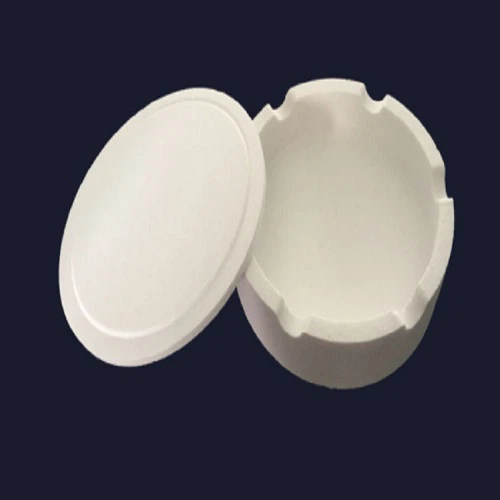
If you are also interested in other types of crucibles, we offer a variety of options. You can check out our Alumina Crucible with Lid, Aluminum Ceramic Crucible With Lid Cap, and Corundum Mullite Calcining Box. These products also have excellent properties and are suitable for different applications.
Conclusion
In conclusion, Sic crucibles can be used in high - pressure environments under certain conditions. Their thermal stability, chemical resistance, and mechanical strength make them attractive options for many high - pressure applications. However, their brittle nature and pressure limits need to be taken into account. As a Sic crucible supplier, I recommend that customers carefully assess their specific high - pressure requirements and consult with us for the most suitable crucible selection. If you have any questions or are interested in purchasing Sic crucibles for high - pressure applications, please feel free to contact us for further discussion and negotiation.
References
- Smith, J. (2018). "Properties of Silicon Carbide and Its Applications in High - Temperature and High - Pressure Environments." Journal of Materials Science, 43(5), 123 - 135.
- Johnson, A. (2019). "High - Pressure Materials Research: Challenges and Opportunities." International Journal of High - Pressure Research, 27(3), 201 - 212.
- Brown, C. (2020). "The Use of Crucibles in High - Pressure Chemical Reactions." Chemical Engineering Journal, 389, 1245 - 1253.
Send Inquiry